Okay, I’m a bit late with the monthly recap and so it came in a bi-monthly package, but that’s still alright, right?
February was a bit of a busier month at school/in general, so it isn’t surprising to me that my total number of books for the month dipped – I still managed to finish 7, though, which I’m happy with. Strangely enough, almost all of these titles were for “fun,” i.e. they were tangential to any school or work project that I’m engaged with right now (with one slight exception). It’s nice to get any kind of break from work that you can, so I’ll take it.
My titles for February are:
- Seven Eves by Neal Stephenson
- Folsom Untold: The Strange True Story of Johnny Cash’s Greatest Album by Danny Robins
- Reforming Hollywood: How American Protestants Fought for Freedom at the Movies by William D. Romanowski
- The House of the Spirits by Isabel Allende
- Six Questions of Socrates by Christopher Phillips
- Anti-Fandom: Dislike and Hate in the Digital Age Edited by Melissa Click
- The Dark Half by Stephen King
This brings my grand total for the year up to 18/75 – still plenty more to go, though.
And, of course, I still wanted to highlight a few standout reads from this month:
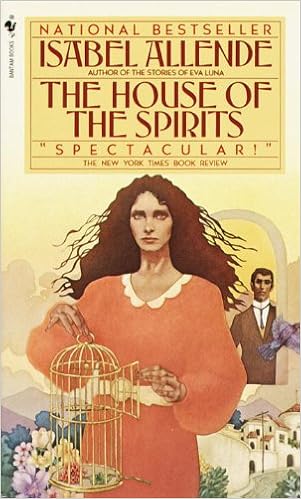
1. The House of the Spirits by Isabel Allende
I’ve long loved the innovation and depth of magical realism as it emerges from Latin American novelists like Allende and Gabriel Garcia Marquez; the worlds that these authors create are so familiar and yet mysteriously unknown that the combined effect is as intriguing as it is intoxicating. What I loved about Allende’s novel in particular was how each chapter feels like a lifetime’s worth of character and plot development, such that each feels like a mini-novel in its own right, complete with intense emotional engagement and a feeling of completeness that nonetheless contributed to the overall development of the characters, the family that forms the central line of the novel, and indeed the whole of the country that acts as the backdrop for the action and yet is really a character in its own right. That each chapter feels this way contributes to a long, winding buildup of the novel, its world, and each of its characters that by the end feels almost oppressively comprehensive – but in the best way imaginable. This is a family and group of characters that lives and breathes and means something to you, the reader, and this is no small feat at all.
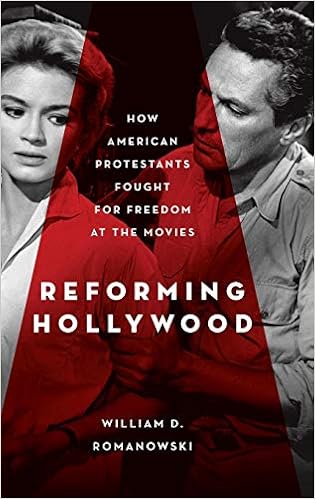
2. Reforming Hollywood: How American Protestants Fought for Freedom at the Movies by William D. Romanowski
Movies are important to me, not just as pieces of entertainment but as artifacts that express ideas, beliefs, and meaning to individuals, groups, and whole cultures. As a Christian, the relationship between cinema and my faith has long been a preoccupation, and I’ve heartily enjoyed Dr. Romanowski’s deep looks into the way that these two spheres ought to overlap and interact. In this book, Romanowski charts the long history of specifically Protestant involvement in Hollywood and the film industry writ large, charting this history along the lines of debate concerning censorship and freedom that still dominate many Protestant discussions of culture and faith. What Romanowski demonstrates here is that the current “Culture Wars” are nothing new, but have a long history back to the earliest days of cinema’s emergence, with antecedents for the discussion emerging from far older conversations surrounding cultural engagement and/or separatism on the part of Christians. The conflicts elaborated on in this volume are important and timely for the current cultural moment, and so this book can provide not only some great insight into the history of Christians and cinema, but can provoke productive conversations surrounding contemporary views of similar issues in the movie theater and beyond.
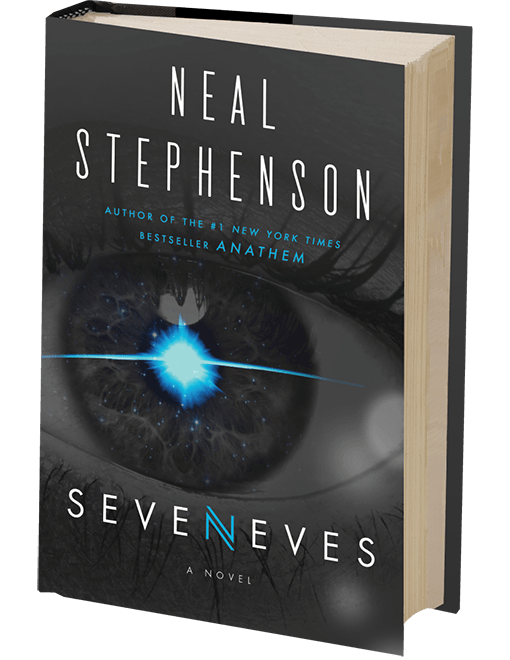
3. Seven Eves by Neal Stephenson
Stephenson’s novels are built like scientific treatises, with an impressively comprehensive grounding in reality such that the believability of the plot is chief, with characterization sometimes seeming to suffer in comparison. This is true of some instances in Seven Eves but not very many; for the most part the human drama of this intensely scientific story is as gripping as the technical drama, though I thought the last third was maybe a little lackluster or could have used some expansion to probe the very intriguing, mysterious depths of character and race relations that emerge in that final act. That being said, for anyone interested in an intensely relatable and rational science fiction novel that feels like it could actually happen at any given moment, this is a fantastic book to pick up. One thing that I greatly appreciated was that the novel didn’t spend too much time focused on the plot’s inciting incident (the sudden, inexplicable breakup of the moon into seven distinct rocks), but instead deliberately explored the consequences of this event for its specific characters, but also for humanity as a whole. Thus the scope of the novel was actually quite incredible, and Stephenson does a fairly masterful job at balancing out the needs and interests of his individual characters with the symbolic realities of such an occurrence for the human race as a whole.
—
March
For reasons unknown to me, March was a bit more of a productive month for reading in spite of still having a lot of coursework to handle and even more to do as far as writing papers/conducting research. In any case, I was quite happy with the books I was able to read this month and the progress I was able to make, which gives me some hope that I’ll be able to continue this pace in later semesters even as school craziness maybe picks up here and there. By the end of the month I had completed 11 more books, bringing my total up to 29/75.
My eleven titles for March were:
- Law School for Everyone by Edward K. Cheng
- It Was Like A Fever: Storytelling in Protest and Politics by Francesca Polletta
- A Mind of Her Own by Paula McClain
- The Introverted Leader by Jennifer B. Kahnweiler
- Summer for the Gods: The Scopes Trial and America’s Continuing Debate Over Science and Religion by Edward J. Larson
- The Sacred and the Profane: The Nature of Religion by Mircea Eliade
- Inherit the Wind by Jerome Lawrence & Robert E. Lee
- Things Not Seen by Andrew Clements
- Killer By Nature by Jan Smith
- Called to Be God’s Leader: Joshua by Henry & Richard Blackaby
- Curated Stories: The Uses and Misuses of Storytelling by Sujatha Fernandes
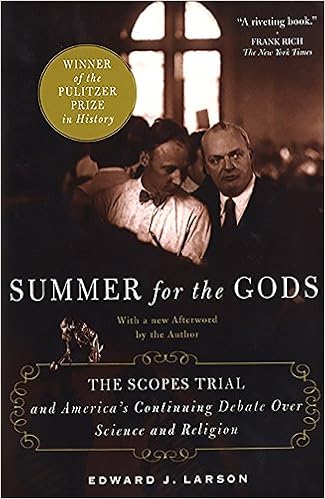
- Summer for the Gods: The Scopes Trial and America’s Continuing Debate Over Science and Religion by Edward J. Larson
I read this book mainly as a piece for a paper that I’ve been working on in one of my classes, but the Scopes trial has always been of intense interest to me as a fascinating case of fanaticism gone awry, with symbolism taking the fore in what would normally have been a rather straightforward legal drama. For those unfamiliar with the Scopes case, Larson does an incredible job at portraying the dramatic elements that led up to the historic confrontation, dramatizing the actual events of the trial, and then giving a brief but comprehensive overview of the resultant cultural fallout. Most admirable about Larson’s account is the way that he keys in on the human participants in this mostly symbolic drama, ensuring that they each get their fair day in his court, and showcasing the way that these individuals and their unique foibles and commitments contributed to what happened in the courtroom there in Dayton, Tennessee. No one escapes his critical eye, but nor does anyone suffer more than any other figure in his assessment of the case. Everyone is rather fairly presented and arguments neatly stated, leaving the reader to form their own judgment about the trial’s actual events, even while showcasing the trial’s fallout and subsequent events in a manner that defies debate. Overall this is a quick read that is dramatically tense and interesting, that gets at the facts and the ideas in a concise, readable manner, and that challenges the reader to think deeply about commitment, fanaticism (religious and otherwise), and belief.
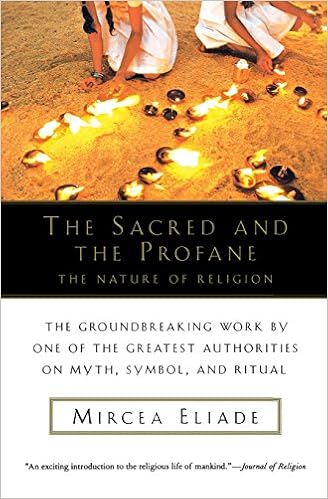
2. The Sacred and the Profane: The Nature of Religion by Mircea Eliade
As a sociological treatise of sorts, Eliade’s work here is interesting for its brevity and the curious scope of its religious inquiries – he does not merely focus on Christianity and Western religions but features an intriguing sampling of Eastern and tribal religious practices that are fascinating to explore in their commonalities with more readily understood religious behavior. Eliade’s categories of the “sacred” and “profane” are simple to understand but complex in their application, and though the book gets a little off the rails in its later chapters in terms of its cohesiveness and the applicability of Eliade’s explorations, the relationship between media, ritual, and the individual believer in the opening chapters provide plenty to think about from both academic and personal perspectives on the nature of belief and worship. That all of this complexity is packaged in an easy-to-read style that makes it so one could complete the book in one or two sittings is just an added bonus.
3. Things Not Seen by Andrew Clements
I love books that are simple in their idea and yet fully committed to those ideas in a way that forces you to take them seriously, which often has the result of expanding your own thinking and causing you to imaginatively consider the world around you. The premise of Things Not Seen is that the main character, Bobby, wakes up one day and is invisible. From this simple, even absurd premise springs a heartwarming meditation on disability, on family love and relationship, and on sickness and cure. These are heady topics for a Young Adult novel, but Clements balances the elements well in such a way that the book is only marginally for a younger audience, as it asks challenging questions of even adult readers. There are still Clements’s trademark elements of fun and humor present in the novel, but I appreciated that the book incorporates those in a natural fashion into what is ultimately a powerful and affecting story of young minds reconciling with the mysteries of human relationships and ideas of difference between people. I know that many people read this in school growing up, but if you haven’t (or even if you have) I highly recommend diving in and thinking deeply alongside the novel’s characters.
 Zachary Sheldon