
At some point this blog basically just became a book blog, which was never its intention. Maybe 2020 will change that, maybe not. We’ll see. But I’d be remiss not to post my final book review recap for 2019. This year I ended up reading 91 books, having started with a goal of 75. I didn’t love everything I read, but all in all this was a pretty good year in terms of enjoying what I read.
Earlier this year I intended to write monthly reviews, and made it several months into the year before giving that up. For 2020 I’m not promising anything, but I do hope to write more.
In any case, here are my top 12 books for 2019. I’ve highlighted one from each month and given it a bit of a detailed review, and after each month I list the books that I completed in that month.
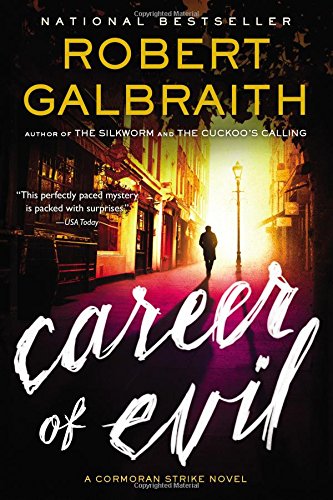
January – Career of Evil by Robert Galbraith (J.K. Rowling)
Towards the end of last year Kathleen got me hooked on the Cormoran Strike series, the mystery/thrillers written by J.K. Rowling under a pseudonym. Let me tell you: they’re stellar. The first two books (The Cuckoo’s Calling and The Silkworm) introduce you to the primary characters in settings and circumstances dictated by a plot that is somewhat detached from them. Cormoran, the curmudgeonly anti-hero, is a detective, and so we follow along on two cases that see him hiring a new assistant, Robin, and becoming more and more involved in her life. This third novel, Career of Evil, takes the series in new directions by capitalizing on the relationships drawn over the course of the first two books to create one of the tensest character-driven novels that Rowling has ever written. Intermingling personal and criminal drama into one of the most twisted and engaging thriller novels I’ve ever read, Rowling’s accomplishment here is incredible. There is probably some requirement that the first two books be read for the impact of the third to really land the way it was intended, but that small bit of homework is more than worth it. This is a fun book, and a genuine study in characterization and character-driven plotting. Not only should fans of good thrillers delve in, but anyone looking to understand how to write and care about real people.
January Books:
- Career of Evil – Robert Galbraith (J.K. Rowling)
- Politics and Film – Daniel P. Franklin
- The Sparrow – Mary Doria Russell
- Transcendental Style in Film – Paul Schrader
- America’s Dark Theologian: The Religious Imagination of Stephen King – Douglas Cowan
- The Last Days of August – Jon Ronson
- Making Stories: Law, Literature, Life – Jerome Bruner
- Argumentation: The Study of Effective Reasoning – David Zarefsky
- Just Mercy – Bryan Stephenson
- The Wounded Storyteller: Body, Illness, and Ethics – Arthur W. Frank
- Power Moves – Adam Grant
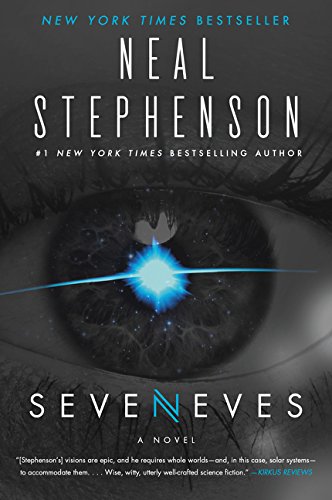
February – Seven Eves by Neal Stephenson
There are few writers out there like Stephenson, who can take convoluted and storied subjects and turn them into gripping, dramatic novels. In Seven Eves, Stephenson takes on astrophysics, the vagaries of living in space, the challenges of interpersonal relations and the sociological evolution of humanity in a story that’s as thrilling as it is scientifically accurate. After the moon mysteriously and inexplicably explodes, the destiny of humankind is thrown into total disarray, with disastrous and incredible consequences. Starting from this rather fantastical beginning, Stephenson does an incredible job of grounding the story in real, human characters whose individual lives, interests, and realities contribute meaningfully to the drama that unfolds as world leaders and normal individuals try to cope with the massive changes coming to the world and to humans beyond the world. In this way the novel gives us useful, believable, and sympathetic characters to use as lenses for examining the morality that infuses even contemporary life on earth, and the consequences of the decisions that we make for ourselves and others every day. That this is all contained in a story that somehow manages to make physics and chemistry fun, too, is something remarkably special. Stephenson’s work is definitely not for everyone, it can be dense and technical, but for the most part here the technical elements are very subservient to the human drama unfolding between its characters, and so makes for some thrilling sci-fi reading.
February Books:
- Seven Eves – Neal Stephenson
- Folsom Untold: The Strange True Story of Johnny Cash’s Greatest Album – Danny Robins
- Reforming Hollywood: How American Protestants Fought for Freedom at the Movies – William D. Romanowski
- The House of the Spirits – Isabel Allende
- Six Questions of Socrates: A Modern-Day Journey of Discovery Through World Philosophy – Christopher Phillips
- Anti-Fandom: Dislike and Hate in the Digital Age – Melissa A. Click
- The Dark Half – Stephen King
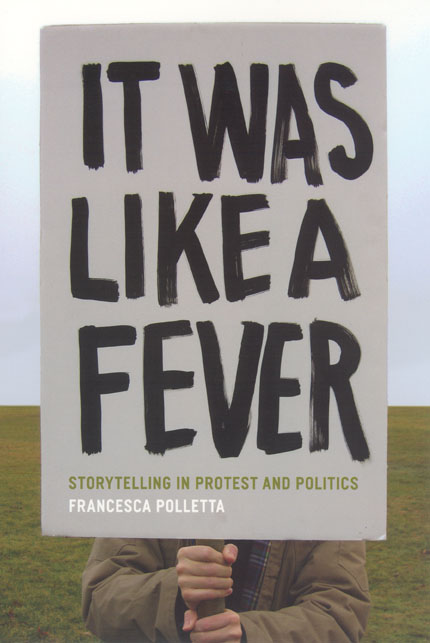
March – It Was Like A Fever: Storytelling in Protest and Politics by Francesca Polletta
Stories are incredibly powerful things. We need stories to function in society, to make sense of our lives, and to live amongst one another. We also need stories in order to change the world. Polletta’s book discusses the power of stories as a tool for protest and organizing, highlighting how stories have been used to both empower and disempower various movements and individuals throughout history. In so doing the chapters provide insight into just how we try to make sense of stories and shape them to contribute to our concomitant shaping of the world around us. That this often happens through protest movements is significant, and highlights ways in which stories transcend individuals or even small-group transmission to make an impact on the world in a much bigger way. My recollection of this book is that for the most part it is engagingly written and historically revelatory, making it great fun to explore the past in a way that emphasizes its connections to contemporary situations. The in-depth treatment of story as a theoretical concept and idea is maybe not everyone’s cup of tea, but I loved where this book went with the idea and the tools that it provides to those who wish to continue thinking about the way that stories can be used, shaped, and understood.
March Books:
- It Was Like A Fever: Storytelling in Protest and Politics – Francesca Polletta
- Law School for Everyone – Edward K. Cheng
- A Mind of Her Own – Paula McLain
- The Introverted Leader – Jennifer B. Kahnweiler
- The Sacred and the Profane: The Nature of Religion – Mircea Eliade
- Summer for the Gods: The Scopes Trial and America’s Continuing Debate Over Science and Religion – Edward J. Larson
- Inherit the Wind – Jerome Lawrence
- Things Not Seen – Andrew Clements
- Killer by Nature – Jan Smith
- Curated Stories: The Uses and Misuses of Storytelling – Sujatha Fernandes
- Called to Be God’s Leader: Joshua – Henry Blackaby
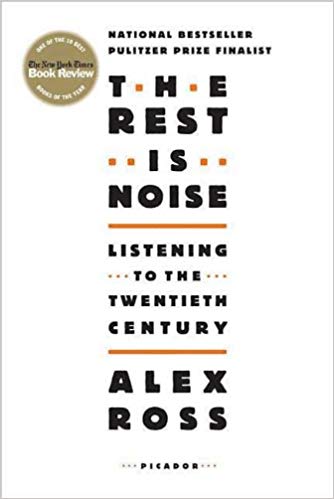
April – The Rest is Noise: Listening to the Twentieth Century by Alex Ross
I don’t listen to as much classical music as I maybe ought to (it’s good for studying or something, right?), but I can certainly appreciate the evolution of a cultural field that has been around and relevant for centuries. While Ross’s book occasionally gets bogged down in a flood of names and dates, for the most part his cultural history is engaging and makes relevant and understandable the important evolutions and trends in classical composing, and demonstrates how these trends were both influenced by culture and in turn shaped the culture that followed. This book is definitely not for everyone. It would help to have a greater grasp of classical music coming into the book, which certainly affected my enjoyment of the text. But as a model for how to approach the writing of a cultural history, and how to enliven a subject matter that many contemporary listeners or readers might find rather dry, Ross’s book is excellent.
April Books:
- What is Reformed Theology?: Exploring the Basics – R.C. Sproul
- The Rest is Noise: Listening to the Twentieth Century – Alex Ross
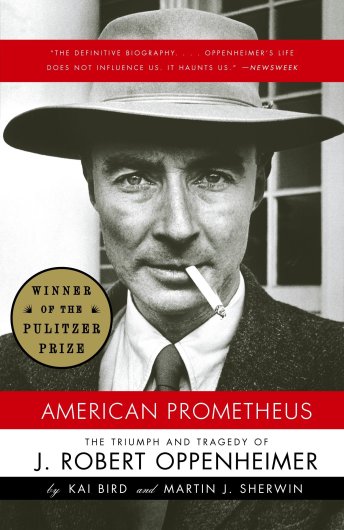
May – American Prometheus: The Triumph and Tragedy of J. Robert Oppenheimer by Kai Bird and Martin J. Sherman
For some unknown reason it seems that this year I read or listened to a decent amount of books about the relationship between science and culture or society. I’m not good at science-type stuff or even understanding scientific language, but there’s something intensely interesting to me about the personalities attracted to and good at scientific work. This biography of the father of the A-bomb is maybe the best example of how and why these stories fascinate me. I knew a little bit about Oppenheimer going into it, namely that he was ultimately shamed and culturally maligned, but I had little understanding of the depth of his personality and the intensity of his thought, and how these quirks and habits of personality shaped him into effectively the single, perfect person to run America’s nuclear program in its fledgling days. Bird and Sherwin’s biography pulls zero punches in its depiction of both Oppenheimer’s foibles and shortcomings and the eventual way that his enemies in the U.S. government maligned his reputation and past for political ends. In this unflinching portrait, though, we get a glimpse of an ideal of a remarkably intelligent individual considering far more than just his own expertise and interests. Oppenheimer had a brilliant scientific mind, but was ultimately more interested in his presence in the world as a human being than he was in making scientific strides for the sake of science. His most remarkable contribution to the Manhattan Project was not the bomb that eventually resulted, but the arguments that he made about its implications for society and the human race, and the passion with which he defended those positions. That he was publicly deposed and chastised for those views only makes him more admirable, in my view. This has been a somewhat rambling overview, but in short this book provides an intensely detailed and fascinating portrait of an underappreciated figure in the history of American and world science, and also stirs a host of engaging and important ethical and moral questions about what we do with science and the power that scientific knowledge brings. And the point that I think it makes, at least at some level, is that these questions are ones we all have to answer, no matter our expertise, specialty, or level of knowledge in our own respective fields.
May Books:
- Legacy of Ashes: The History of the CIA – Tim Weiner
- Experiencing God – Henry Blackaby
- Textual Analysis: A Beginner’s Guide – Alan McKee
- Living With the Gods: 40,000 Years of Peoples, Objects, and Beliefs – Neil MacGregor
- Religion in the Media Age – Stewart Hoover
- Life Together – Dietrich Bonhoeffer
- Communication in History: Stone Age Symbols to Social Media – David Crowley
- American Prometheus: The Triumph and Tragedy of J. Robert Oppenheimer – Kai Bird and Martin J. Sherman
- Havasupai Legends: Religion and Mythology of the Havasupai Indians of the Grand Canyon – Robert C. Euler
- The Disaster Artist – Greg Sestero
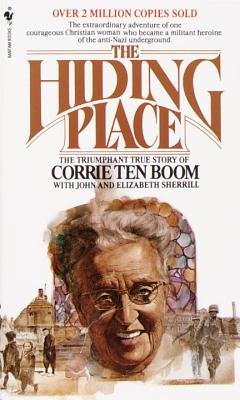
June – The Hiding Place by Corrie Ten Boom
As someone with an enduring interest in both my faith and World War II it should not have taken me so long to get around to reading this, but I can admit that it took Kathleen finishing the book and raving to me non-stop to finally jump in–and I’m incredibly glad that I did. Ten Boom’s story was somewhat familiar to me coming in; honestly it’s hard to grow up in a Christian church without hearing about her, I think, as the subject of sermon illustrations or even just general discussions around the book and her story (this is helped, of course, by World War II and the Nazis being just the epitome of evil and so brought up as examples all the time in all sorts of settings). But in finally reading the book I was impressed that the actual story was so much more than the events that are typically discussed–i.e. hiding Jews, smuggling food and Bibles, etc. What I was impressed by most in Corrie’s story were the moments of quiet faithfulness and the small lessons that individuals passed on to her and her family amidst the struggles. From her father’s proverbs to her sister’s thankfulness in the most hellish of circumstances, the little, quiet moments of the story spoke to me at an astounding volume. In discussion about the book Kathleen noted one time that those aspects of the story made it feel almost more like a devotional at times than the story that it was, and I wholeheartedly agree. The circumstances and larger implications of Corrie’s actions and those of the people around her are critical to making the small moments stand out to us in our historical understanding of what was happening, but ultimately the story is of faithful devotion to God in even the smallest of things, no matter the circumstance–in war or in peace, in times of need or times of plenty. That’s the important takeaway, and the primary memory that I carry with me from this book.
June Books:
- The Hiding Place – Corrie Ten Boom
- The Lakotas and the Black Hills: The Struggle for Sacred Ground – Jeffrey Ostler
- The National Parks: America’s Best Idea – Dayton Duncan
- American Gods – Neil Gaiman
- Down the Great Unknown: John Wesley Powell’s 1869 Journey of Discovery and Tragedy Through the Grand Canyon – Edward Dolnick
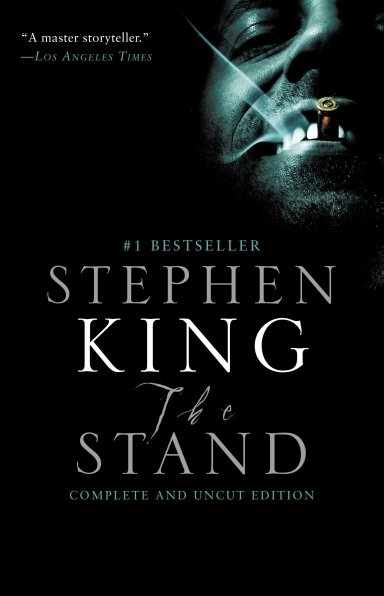
July – The Stand by Stephen King
I have long made the argument that Stephen King does not write horror stories. He writes phenomenal character-driven dramas that use horrific things to highlight elements of the human condition in a manner that enables us to more thoughtfully see ourselves and the people around us. That some of these horrific elements are supernatural doesn’t matter at all; King’s a phenomenal observer of human society, and what he writes holds up a mirror to humanity’s best and worst tendencies. The Stand is an incredible example of this, and the fact that it was written so early in King’s career (it was only his fourth novel) makes it even more amazing to me that his reputation as a horror writer is what has persisted. There is horror in this novel for sure, but there is also hope and beauty and intense goodness. What was most impressive to me about this novel was how slow, detailed, and measured the progress of the story is. It’s realistic in taking a remarkably slow pace in covering humanity’s slow return to societal functioning after decimation from a worldwide plague, but the steps that people take and the slow progress they make never feels arduous or boring, but the energy that exists between the characters helps even the plodding steps they are taking seem significant and meaningful–just as they would if we ourselves were in such a situation. In the introduction to the extended/uncut version of the book King notes that fans have often asked him about the characters as if they were real people, and by the story’s end I could completely understand why. These are some of the most clearly drawn, archetypal, and human characters that King has ever written, and I loved every moment that I got to spend with them. As I said above, there is horror here–reading this as people around me got colds and the flu was legitimately terrifying and I kept being afraid of the fictional super flu in an almost ridiculous fashion–but that horror is a perfect foil through which to explore the realities of what it is to be human. Here, King does that in near-perfect fashion.
July Books:
- The Power of a Whisper – Bill Hybels
- The Cow in the Elevator: An Anthropology of Wonder – Tulasi Srinivas
- I Don’t Have Enough Faith to Be An Atheist – Norman L. Geisler
- The Stand – Stephen King
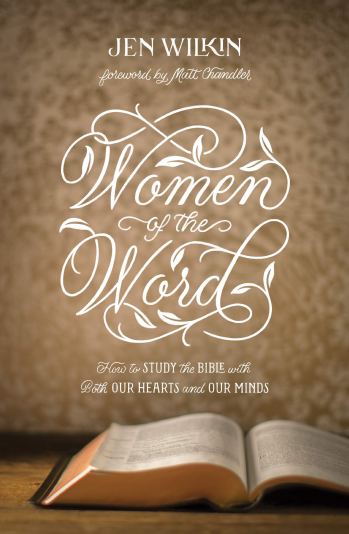
August – Women of the Word: How to Study the Bible with Both Our Hearst and Our Minds by Jen Wilkin
Don’t let the title fool you – this book is most definitely for everybody who desires to grow in their relationship with God through the study of the Bible. Wilkin’s audience is primarily women, at least in her writing, but the guidance she offers will really benefit everyone. The problem that she is addressing is the lack of depth and scriptural understanding that people bring to their study of the Bible, which manifests in surface-level, emotionally-driven readings and discussions. That this problem has been gendered and attributed primarily to women is a sad fact of the church today, but ultimately a reality for both genders. Wilkin addresses this problem by providing a four-step roadmap to approaching scripture in a way that emphasizes deep engagement with the text to give the Word primacy in its own interpretation and the establishment of its relevancy. In a sense, Wilkin’s goal is to empower individuals to approach the Bible in a manner that lets it speak its truths on its own. This is admirable and necessary, and certainly not something that ought to be limited to one gender or another. So–don’t let the title fool you. If you want to grow, and to let Scripture speak to you, then engage it; and this little book can help you with that pursuit.
August Books:
- The New Testament – Bart D. Ehrman
- Women of the Word: How to Study the Bible with Both Our Hearts and Our Minds – Jen Wilkin
- A Common Faith – John Dewey
- Me, Myself & Bob: A True Story about God, Dreams, and Talking Vegetables – Phil Vischer
- The Archived Web: Doing History in the Digital Age – Neils Brügger
- In Mixed Company: Communicating in Small Groups and Teams – J. Dan Rothwell
- White Trash: The 400-Year Untold History of Class in America – Nancy Isenberg
- The Religious History of America: The Heart of the American Story from Colonial Times to Today – Edwin Gaustad & Leigh Schmidt
- Beautiful, Bright and Blinding: Phenomenological Aesthetics and the Life of Art – H. Peter Steeves
- America: Religions and Religion – Catherine L. Albanese
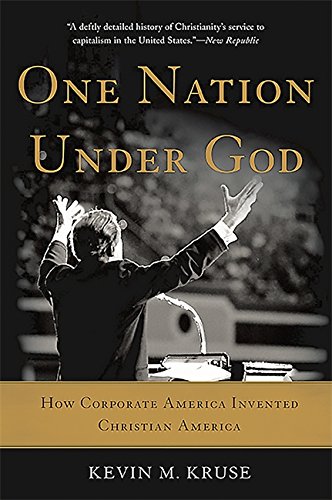
September – One Nation Under God: How Corporate America Invented Christian America by Kevin M. Kruse
History is important, but often somewhat arduous to read. What is perhaps Kruse’s greatest accomplishment here is that he makes history come alive in almost novelistic fashion, all while telling one of the most important but misunderstood stories in American history. The tale that Kruse is tackling here is the interrelationship between the Christian faith, politics, and contemporary marketing and psychology. This is, to me, a fascinating and important mix of elements that have had significant ramifications for the growth and development of the American church. One thing that I am consistently concerned with in my own life and research is the continued and pervasive presence of technology in churches and in worship, and many of the specific developments of these trends can actually trace their beginnings back to the political and technological changes that Kruse details here as they grew up in the 50s and 60s in response to war and ideological threats across the world. That so much of what we see in the church around us today has recourse to decisions made at these crucial times in American history is a fascinating reality that raises significant questions for the actions and decisions that churches face and ought to make today, and so in this fashion Kruse’s book provides a primer to understanding our own critical moment. It does help that he writes in such an engaging fashion, and relies heavily on primary source materials and quotes to make this story come alive. No matter one’s political affiliation or stance on technology and advertising as it relates to church, I think that this is an essential read for raising important questions that the church needs to face and answer in every generation.
September Books:
- One Nation Under God: How Corporate America Invented Christian America – Kevin M. Kruse
- The War of Words – Kenneth Burke
- The Immortal Life of Henrietta Lacks – Rebecca Skloot
- God’s Own Party: The Making of the Christian Right – Daniel K. Williams
- Political Style: The Artistry of Power – Robert Hariman
- American Apocalypse: A History of Modern Evangelicalism – Matthew Avery Sutton
- The History of Sexuality, Volume 1: An Introduction – Michel Foucault
- Einstein: His Life and Universe – Walter Isaacson
- The Rise of Liberal Religion: Book Culture and American Spirituality in the Twentieth Century – Matthew S. Hedstrom
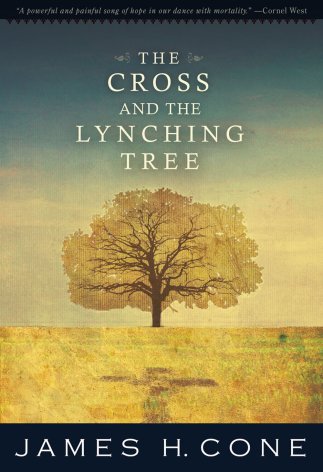
October – The Cross and the Lynching Tree by James H. Cone
This month was actually pretty challenging to pick one book to focus on (if you’re at all interested in religious studies you definitely need to check out God is Red by Vine Deloria Jr.), but ultimately I settled on Cone’s The Cross and the Lynching Tree because of what it represents in today’s fractured political and spiritual moment. Cone argues here that American Christianity has for too long ignored and forsaken the connection that exists between Jesus on the cross and the murder of black men and women via lynching. There is theological and practical significance to recognizing this connection, which Cone argues ought to draw individuals closer together under a common understanding of our shared faith, even as the history of that faith featured considerable and horrific acts of violence. In his systematic approach to incorporating the lynching tree into a deeper understanding of the Christian faith, Cone takes past American theologians to task for their ignorance and outright avoidance of the issue of lynching, discusses the way that popular culture and song have dealt with the theology of the lynching tree, and ultimately provides a message of hope for common understanding, dialogue, and grace in the contemporary church. This isn’t an easy read, because it explicitly calls out attitudes of complacency and ignorance that have for too long pervaded the church. But in so doing this becomes a necessary read, one that challenges and provokes, and which has teh potential to form ties and solidarity between races, denominations, and worldviews.
October Books:
- Mythologies – Roland Barthes
- Snow Crash – Neal Stephenson
- God is Red: A Native View of Religion – Vine Deloria Jr.
- The Institute – Stephen King
- The Cross and the Lynching Tree – James H. Cone
- The Practice of Everyday Life – Michel de Certeau
- Faith for Living – Lewis Mumford
- Dancing in the Dark: Youth, Popular Culture, and Electronic Media – Quentin Schultze, et al.
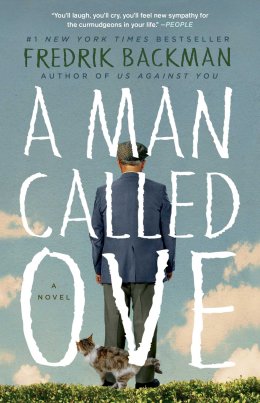
November – A Man Called Ove by Fredrik Backman
A theme throughout many of these mini-reviews is that in fiction, character is king. Plot is one thing, but plots are only as interesting as the characters who inhabit them. What A Man Called Ove demonstrates perhaps more than most other novels I’ve read this year is that hardly anything need happen in a book for it to remain interesting, emotionally engaging, and ultimately intensely meaningful for readers. Backman’s novel is a quiet study of a man on the verge physically and especially emotionally, coping with a slew of changes that he doesn’t want and never anticipated, wanting nothing but for everything in his life to remain the way that it always has. As he is more and more forced to come out of his shell and to confront the realities of living amongst neighbors, the hero, Ove, shows each of us a little about the stubbornness and immovability that we all harbor deep down inside. That this kind of beautiful, simple, yet meaningful lesson-learning comes through a plot that is little more than a string of events that many people will encounter at some point in their lives is a remarkable accomplishment. Backman’s quiet study of Ove is infused with a calming grace and relatable humor that makes its style and simplicity quite beautiful. That the book manages to do all of this while remaining as touching and funny as it is speaks to Backman’s incredible talent.
November Books:
- The Outsider – Stephen King
- Dark Green Religion: Nature Spirituality and the Planetary Future – Bron Taylor
- Reassembling the Social: An Introduction to Actor-Network Theory – Bruno Latour
- Pedagogy of the Oppressed – Paulo Freire
- A Man Called Ove – Fredrik Backman
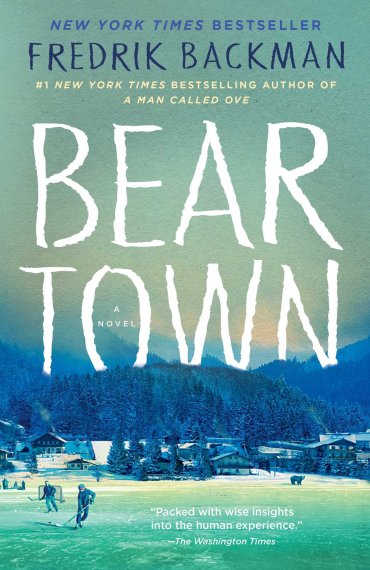
December – Beartown by Fredrik Backman
Just as in A Man Called Ove, highlighted above, Backman packs his novel Beartown full of real human characters, replete with virtues, vices, idiosyncrasies, dreams, hopes, loves, and disappointments. Here, though, instead of focusing on a single man and his growth, we are treated to a portrait of an entire town caught up in one of the most addicting drugs there is: hockey. Even if you don’t like the sport, Beartown does an incredible job creating a living, breathing community that is defined by its obsessions, and filled with the people that both create and perpetuate such commitments. Following a variety of players, managers, and everyday people in the community, Backman paints an incredible portrait of how people’s passions and sins combine to create the best and worst parts of life. Like Ove, this book relies on its characters to move the action forward, and the plot that emerges feels like a natural outgrowth of the obsessions and foibles that we’ve seen the main cast display in the early parts of the novel. This is a very different book than A Man Called Ove, and so demonstrates Backman’s uncanny ability to create well-rounded characters and situations in a variety of novelistic forms. Stylistically the book is certainly different from Ove, but maintains a love of aphorisms and poetic prose, combining to create an evocative, heartbreaking, remarkably human story in the midst of the frozen Swedish woods. This particular story is followed up by a sequel, Us Against You, which was the last book that I finished this year. That book is a worthy follow-up, albeit a bit different stylistically; but Beartown is a gem unto itself, an endearing tragedy that nonetheless encourages readers in the triumph of the human spirit, and the goodness of people to each other even in the midst of great evil. I highly recommend it.
December Books:
- Ecopiety: Green Media and the Dilemma of Environmental Virtue – Sarah McFarland Taylor
- Religion Out Loud: Religious Sound, Public Space, and American Pluralism – Isaac Weiner
- The Secular Religion of Fandom – Jennifer Otter Bickerdike
- Historical Methods in Mass Communication – James D. Startt
- The Post-Evangelical – Dave Tomlinson
- David Fincher: Interviews – Laurence F. Knapp
- Beartown – Fredrik Backman
- The Sundance Kids – James Mottram
- Us Against You – Fredrik Backman
 Zachary Sheldon