I actually started out this year somewhat reticent to read. My comprehensive, doctoral exams were coming up in the fall, and between those and the coursework that I was still actively engaged in, I wasn’t sure really whether I’d find time for “fun” reading or if I’d be so bent on knowing the books on my exam reading list inside and out that I’d just forgo most other books.
But then, you know, there was a pandemic that kept me home. This certainly made it easier to read the books that I had to, as well as the ones that I wanted to, but there were definitely times where the almost unlimited available reading time threatened to overwhelm in a different way–when all you have to do is read, sometimes reading seems like the least attractive thing to do.
In the end, though, this turned out to be one of my most productive years, reading-wise. I finished at 102 books total, with a fair mix of fiction and fun non-fiction in the midst of things that I was required to read for school. And as has become my annual tradition, I’ve highlighted one book from each month of 2020 below, while also providing a full list of everything I read in each month.
January
- Sleeping Beauties – Stephen King and Owen King
- How to Become a Federal Criminal: An Illustrated Handbook for the Aspiring Offender – Mike Chase
- Digital Religion – Heidi A. Campbell
- Rhetoric in Popular Culture – Barry S. Brummett
- Blade Runner 2049 and Philosophy – Robin Bunce
- David: A Man of Passion and Destiny – Charles Swindoll
- Religion and American Culture: A Reader – David G. Hackett
- TechnoFeminism – Judy Wajcman
- Against the Day – Thomas Pynchon
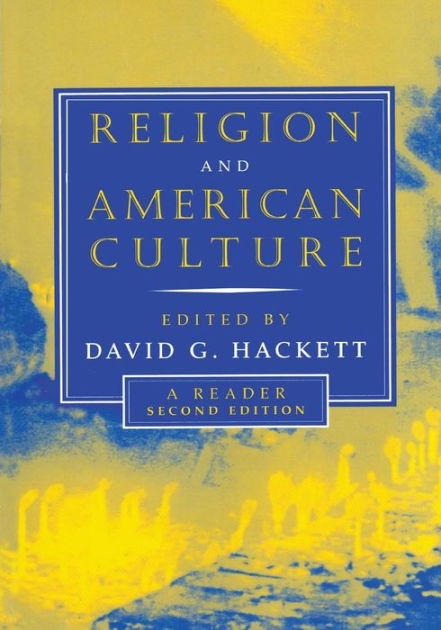
Religion and American Culture: A Reader – Edited by David G. Hackett
I started reading this in connection with a class in religious studies that I took in the Fall 2019 semester, and was so captivated by many of its chapters that I made it a special point to read all the chapters that I hadn’t read in class once the semester had ended. This collection is a tremendous resource for understanding many of the major themes and problems of studying and writing about American religion and religious history, with a great number of classic as well as contemporary articles and book chapters contained within its pages. Some of these highlight what may seem like familiar, traditional religions and their interactions with popular and political culture in America, and others turn the very notion of religion on its head and ask questions about how things like brands and icons and consumer goods interact with and inform our typical understandings of religion, religious practice, and belief. Even if some of the chapters throughout the book come across a little dated, the questions that are spread throughout these varied essays are as fresh and engaging as ever, and have still proven useful in challenging my thinking about how I construe my understandings of religion and the role of my own personal religion in the larger context of American culture. I even ended up assigning one chapter of this book (David Chidester’s “The Church of Baseball, the Fetish of Coca-Cola, and the Potlatch of Rock ‘n Roll”) to some of my students this past semester, and definitely saw the value of the kinds of questions and thinking that that and other essays in the book provoke. This is a long edited collection, and some of the chapters are quite heady and get into disciplinary concerns unique to the field of religious studies, but spread throughout are a number of great, thought-provoking, challenging essays that anyone interested in questions of faith and culture could certainly benefit from.
February
- Shaking the World for Jesus: Media and Conservative Evangelical Culture – Heather Hendershot
- Nine Theories of Religion – Daniel L. Pal
- Emergence of Cinematic Time: Modernity, Contingency, the Archive – Mary Ann Doane
- A Long Time Ago in a Cutting Room Far, Far Away: My Fifty Years Editing Hollywood Hits – Paul Hirsch
- A Kim Jong-Il Production: The Extraordinary True Story of a Kidnapped Filmmaker, His Star Actress, and a Young Dictator’s Rise to Power – Paul Fischer
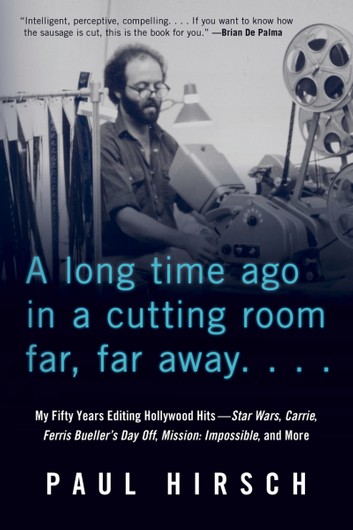
A Long Time Ago in a Cutting Room Far, Far Away: My Fifty Years Editing Hollywood Hits – Paul Hirsch
This one was just a fun read. Paul Hirsch has had a front-row seat to the making of many of Hollywood’s most enduring classics, from Star Wars to Carrie to Mission: Impossible and beyond. His memoir is a sometimes rambling, always entertaining glimpse into the business and the craft of filmmaking and editing, with a tremendous knack for simplifying technical jargon into understandable bits that are colored with a fun attention to the characteristics of the various stars and industry figures that Hirsch worked with along the way. What I most admired about Hirsch’s style and memories is that they were all personalized, but with great attention to the place that people, figures, and projects have in the larger cultural changes in Hollywood. This is neither a gossip-riddled revelation of the habits and idiosyncrasies of the stars nor a heavily technical treatise on the ins-and-outs of editing. Hirsch’s conversational tone effectively allows him to guide the reader through a kind of aesthetic education in the art of film editing–pointing out types of cuts, common strategies for cutting, techniques of cutting, etc.–while also telling his story in a personable, relatable, lively fashion such that you feel as grateful for Hirsch’s experiences in film as he is by the story’s end. Not everyone is as interested in the background of moviemaking and, specifically, editing as I am, but for anyone even a little bit inclined I’d say this is a must-read kind of book.
March
- The Internet of Garbage – Sarah Jeong
- The Art of Moral Protest: Culture, Biography, and Creativity in Social Movements – James M. Jasper
- Star Wars: Battlefront, Inferno Squad – Christie Golden
- Understanding Media: The Extensions of Man – Marshall McLuhan
- Lethal White – Robert Galbraith (J.K. Rowling)
- The Final Solution – Michael Chabon
- Brands of Faith: Marketing Religion in a Commercial Age – Mara Einstein
- Freaky Deaky – Elmore Leonard
- The Secret Diary of Laura Palmer – Jennifer Lynch
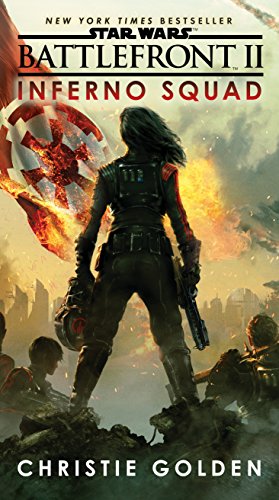
Star Wars: Battlefront, Inferno Squad – Christie Golden
Never underestimate the power of a semi-trashy sci-fi romp to get you excited about reading. This Star Wars novel hit at a strange time in the year, for me. Most of what I’d read up through the beginning of March was for school, with a few other books mixed in mainly because I was listening to audiobooks as I commuted back and forth to school/work, and even though it was only March my upcoming exams and their relatively daunting reading lists was already haunting me. Then, of course, the pandemic really came ashore in the U.S., and school was moved online and suddenly I had a lot more time on my hands. Even still, I wasn’t all that excited about the prospect of doing much reading. But then this little book, given to me by a dear friend with a strong recommendation for how fun it was, really caught my attention.
In short, Inferno Squad is exactly what you’d expect from a Star Wars novel. It’s characters aren’t all that complex, its plot wears its structure and most of its twists on its sleeve, and the writing itself isn’t necessarily anything to write home about. But despite all of the generic qualities that it had or could have had, this book ended up being a tremendously thrilling adventure. The plot’s multiple levels of deception and intrigue could have been tiresome or confusing, but the story was simple enough even with these layers that most of the fun of the book ended up being about whether or not the straightforward structure that the early chapters portend would be borne out or if the book would defy the expectations it had set out for itself in some inventive fashion. In addition, the characters, for all their adherence to some well-worn tropes, were plausible and enjoyable, with some real humanity revealed, I think, as a consequence of the plot’s reliance on shifting loyalties. Was this the absolute gold standard of science fiction? No, not necessarily. But it was good. And, more importantly, it was pure fun, with not even a pretense of overt seriousness to get in the way of that enjoyment. and after even just a couple of months of reading a lot of heavier work, and at the start of a period of extended quarantine, this was the perfect adventure to engage with to reinvigorate my desire to keep reading both fiction and non-fiction (what was required of me and beyond) throughout the year.
April
- Celebrity Worship – Pete Ward
- Convergence Culture: Where Old and New Media Collide – Henry Jenkins
- Spreadable Media: Creating Value and Meaning in a Networked Culture – Henry Jenkins, Joshua Green, and Sam Ford
- Weaveworld – Clive Barker
- Mediated: How the Media Shapes Your World and the Way You Live in It – Thomas de Zengotita
- The Big Picture: The Fight for the Future of the Movies – Ben Fritz
- When Religion Meets New Media – Heidi A. Campbell
- Pandemic! – Slavoj Zizek
- Networked Publics – Kazys Varnelis
- Apollo 13: Lost Moon – Jim Lovell

Weaveworld – Clive Barker
I first became intrigued by Clive Barker through his reputation as a horror writer from The Books of Blood; then I read a novel of his that I absolutely hated (Mister B. Gone) and promptly decided that even though I’d collected several of his books already, I probably wouldn’t end up being a big fan of his work. But I also knew enough about him to know that he wasn’t just a horror writer, and that his early reputation was, according to all the sources that I knew about and trusted, very well-deserved. So, I decided to tackle Weaveworld, knowing that it was fantasy rather than horror, and hoping that it would give me a different angle on a writer whose works I truly wanted to love. In the end, I’m not sure that Weaveworld convinced me to love Barker’s work without question (I think I’ll need at least two or three more books to really get a handle on him), but it was an intriguing, emotionally-invested fantasy that had both a nuance and a playfulness to it that I hadn’t expected. There are times when Barker’s horrific roots show through, as he revels in the death and destruction wrought by some of his most vile characters, but in many other instances the world in these pages was a light one, with a tremendous amount of good humor and beauty. At times the delicacy and restraint of the prose was legitimately delightful, and the travails of his hero and his desperate attempts to do the right thing for himself and the world was harrowing and captivating. There were other times where the book’s pace slogged and some of the more fantastical descriptions went on a tad too long for my taste, but there was no denying that all throughout the book were discrete and prominent touches of magic that salved those sections and compelled you on to the next. Though it’ll still probably be a little while before I jump back into one of Barker’s fantastical creations, I know that I ended up truly enjoying my time in this one.
May
- The Rise of the Network Society: The Information Age – Manuel Castells
- Technics and Civilization – Lewis Mumford
- On Symbols and Society – Kenneth Burke
- Networked: The New Social Operating System – Lee Rainie and Barry Wellman
- Orphan Justice: How to Care for Orphans Beyond Adopting – Johnny Carr
- Alone Together: Why We Expect More from Technology and Less from Each Other – Sherry Turkle
- The Sacred in the Modern World: A Cultural Sociological Approach – Gordon Lynch
- Rage – Richard Bachman (Stephen King)
- The Long Walk – Richard Bachman (Stephen King)
- Dogsong – Gary Paulsen
- Roadwork – Richard Bachman (Stephen King)
- Laws of Media: The New Science – Marshall McLuhan
- The Running Man – Richard Bachman (Stephen King)
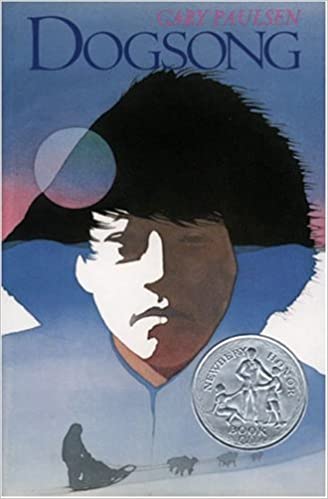
Dogsong – Gary Paulsen
I don’t remember exactly how old I was when I read Gary Paulsen’s Hatchet, but it was actually life-changing–I quickly gobbled up the rest of the books in that series, and then moved onto pretty much anything else of Paulsen’s that I could bet my hands on. One of those was Dogsong, which left an impression on me even in middle school. Returning to this YA novel now probably close to 15 years since I last read it (if not more), I was honestly stricken by its beauty and sincerity. The story is about as simple as could be: a young man in a traditional culture, feeling ill-at-ease in contemporary society, tries to return to the old ways. He finds unexpected challenges, engages in a surprise turn of events, and transforms as a result. This tale is drawn in spare, crisp prose that feels simultaneously appropriate for young readers and taut and efficient for older ones. Across each page and twist in the tale I was shocked at how the book read curiously well for, I think, teenagers and adults. In short, the book has aged remarkably well, in my mind. Throughout the book, but especially towards the end, I was surprised at how quickly an emotional bond had been formed in my mind between myself and the lead character and the events that he experienced. In re-reading the book I’d mainly expected to be amused at something I’d loved so dearly as a child, but was blown away by how deeply I felt involved in the characters and their discomforts. While it is somewhat popular now to make fun of writing and views that feel overwhelmed by technology, especially amongst young people who embody a nostalgic outlook for times they never lived through, there is something remarkably sincere about Paulsen’s presentation of these same ideas in the simple story of a boy, his culture, and his dogs. I can see how others reading this book as an adult might feel different, but I very deeply appreciated the time that I spent with it this past spring.
June
- City People: The Rise of Modern City Culture in Nineteenth-Century America – Gunther Barth
- Art as Experience – John Dewey
- Empire and Communications – Harold A. Innis
- The Gutenberg Galaxy – Marshall McLuhan
- Heir to the Empire – Timothy Zahn
- Finders Keepers: A Tale of Archaeological Plunder and Obsession – Craig Childs
- The Bling Ring – Nancy Jo Sales
- The Technological Society – Jacques Ellul
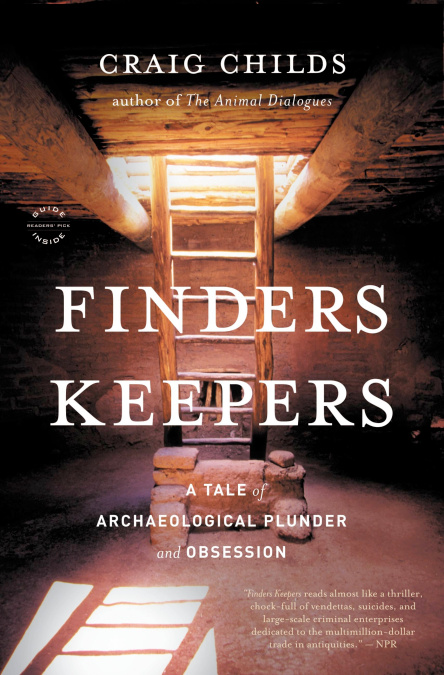
Finders Keepers: A Tale of Archaeological Plunder and Obsession – Craig Childs
June found Kathleen and I in Colorado, getting away for just a little bit in the midst of lockdown. Outside of Colorado Springs we went to what we later learned was a set of reconstructed Native American ruins. In the gift shop we found several books about various tribes and moments in American history, as well as Finders Keepers, which was more about some of the ethical and cultural problems of historical research. We ended up getting the book on Audible (sorry, gift shop) and listening to it across the rest of our drive through the mountains and then back towards home. Read by the author himself, Finders Keepers ended up being one of my favorite reads of the year, combining Childs’s fascinating personal history and experiences treasure hunting and pursuing archaeology in the American west with profiles of other pothunters and larger issues relating to the ethics of finding, excavating, researching, and transporting antiquities. To some extent, the starting point of the book is a deceptively simple situation: say you are walking in the desert and find a piece of pottery or arrowhead on the ground–do you pick it up? Or take it with you? Or report the finding? What right do you have to take it, even if it has clearly been abandoned? These are just some of the most basic questions that the discovery of a simple little object can inspire–and they only get more complicated from there. How do we reconcile the historical drive to understand the past with the imperative of honoring and respecting other peoples and cultures? What role do museums play in this drama? Or archaeologists? Or hobbyists? I can honestly say that despite knowing a decent amount about cultural histories and the especially brutal American history of interactions with ancient cultures, many of the issues that Childs brings up were simply things that I had never thought of before. He effectively complicates the very act of going to a museum by showing how complicated the motives, histories, and actions are that bring artifacts and objects into those institutions. If history is alive, and artifacts and pieces are a part of that living history, what role do museums have in helping that history continue to live, especially when most museums have more of their collection in storage than on display? I’m not sure that I have any specific answers to these kinds of questions. But Childs does an incredible job here of demonstrating that such issues are not quite as clear as they may seem on the surface, and suggests his own perspective for respectfully and carefully dealing with the past even as he tries not to force his own beliefs on others. The issues and ethical conundrums raised in the book were fascinating to explore, even in brief, and showed just how complex the realities of even ostensibly simple concepts like “history” really are.
July
- The Bias of Communication – Harold A. Innis
- The Public and its Problems – John Dewey
- The Modern Temper: American Culture and Society in the 1920s – Lynn Dumenil
- The Condition of Man – Lewis Mumford
- Propaganda: The Formation of Men’s Attitudes – Jacques Ellul
- Faces in the Clouds: A New Theory of Religion – Stuart Guthrie
- Critics Not Caretakers: Redescribing the Public Study of Religion – Russell T. McCutcheon
- The Myth of the Machine – Lewis Mumford
- Respectable Sins – Jerry Bridges
- The Invention of World Religions – Tomoko Masuzawa
Critics Not Caretakers: Redescribing the Public Study of Religion – Russell T. McCutcheon
This was the month that I got really into my comprehensive exam reading list–all the books listed below were for school, with the exception of Jerry Bridges’ Respectable Sins. Very few of the books that I read for my exams were boring, in fact most were extremely interesting, but a few were especially notable for the way they stretched and challenged my thinking. Russell T. McCutcheon’s commentary on the state and process of studying religion in university settings was certainly among those. McCutcheon’s view of religion is that it is a purely socio-rhetorical and socio-historical phenomenon and must be treated as such, with scholarship in this vein seeking to explain religion’s contribution to human society in terms of its organizational, psychological, and societal benefits, drawbacks, and power. And while I disagree with McCutcheon, personally, his thesis and argument also offer compelling challenges to, then, how I do think about studying religion and religious phenomena. At this point I’m not sure that I have as comprehensive an answer to some of McCutcheon’s arguments as I’d like to, or at least I’m not sure that my answers would satisfy him. But nonetheless I will continue to appreciate the difficult questions that he asks of religious studies scholars, and to think carefully about where my own scholarly efforts fit into the academy. Though at times polemical, McCutcheon’s style in this book is very readable and often fairly entertaining, which makes him, in my mind, a rather fun critic to engage with and think alongside–even if we begin and end in very different places.
August
- Dark Force Rising – Timothy Zahn
- Media/Society – David R. Croteau and
- The Hollywood Economist 2.0 – Edward Jay Epstein
- The Last Command – Timothy Zahn
- The Absolutely True Diary of a Part-Time Indian – Alexie Sherman
- Social Movements: The Key Concepts – Graeme Chesters
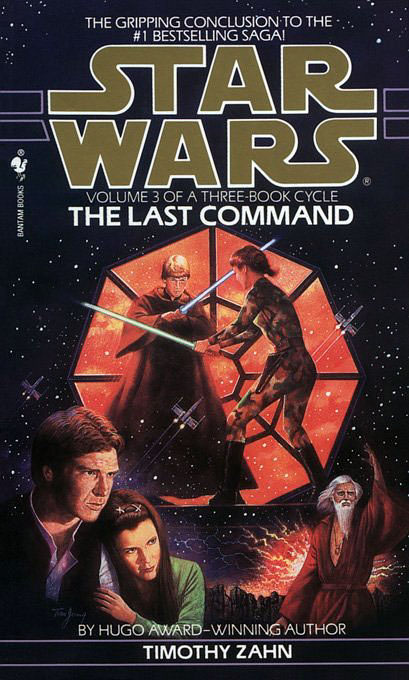
The Last Command – Timothy Zahn
Ah, yes, another Star Wars novel. Truthfully, each of the Thrawn Trilogy books could have been picked as a favorite, but I chose the conclusion of the trilogy mainly in its role as the culmination of the genius of the other two volumes. These books have a long and richly-deserved history as among the best of the (now defunct) Star Wars Expanded Universe, and since it had been well over a decade since I’d read them, it was fun approaching them with fresh eyes. What struck me almost immediately was how complex Zahn gets the plot to be, but how clearly he draws each line of action and character development along to interact with that complexity in surprising and interesting ways. Add in superbly done action, romance, and sci-fi world-building, and each of these books is effectively the “complete package” of what you’d want in a Star Wars novel or, really, just a fun sci-fi romp. While Disney may have ravaged the EU in so many ways, they’ll never be able to take away the sheer thrill of the experience of reading books like these, which honestly excite in much the same way as the original films. There was a pretty big gap, for me, between reading the first book in the trilogy and finishing the other two in August, but if work and school circumstances had allowed I could have easily gobbled up all three in a flash–they’re just so fun.
September
- Rhetorical Invention and Religious Inquiry – Walter Jost
- The Medium is the Massage: An Inventory of Effects – Marshall McLuhan and Quentin Fiore
- The Good Place and Philosophy – Steven A. Benko
- The Dynamics of Architectural Form – Rudolf Arnheim
- Paul: A Man of Grace and Grit – Charles Swindoll
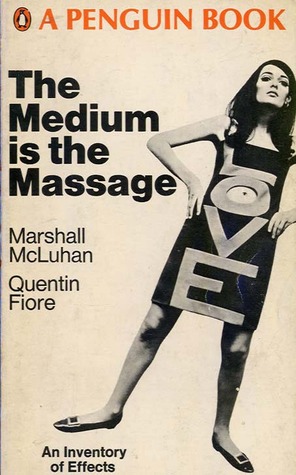
The Medium is the Massage: An Inventory of Effects – Marshall McLuhan and Quentin Fiore
I’m realizing as I get to this point in my reading recap how much the word “fun” has appeared as a critical element in describing each of my favorite books from each month. It is certainly applicable in connection with this book, too. Marshall McLuhan is a staple of media and cultural studies, and has his moments of sheer lucidity that make him a joy to engage with. But at times, as is often noted in critical essays, McLuhan could also be somewhat obfuscating in his prose, dazzling and engaging playfully with ideas rather than coming straight out to describe his thinking, per se. This is all part and parcel of his approach to media, which necessitates engaging its particular qualities to draw out and examine effects. As such, this little illustrated volume is in some senses the apex of his style, while also clarifying and detailing some of his most famous aphorisms. Through combining McLuhan’s proverb-style take on the media with Fiore’s stunning illustrations and graphic layouts, this book helps readers actively evaluate McLuhan’s ideas because here they are actively working on and in the mind of the reader; this book pushes back on the notion of reading an idea in prose, and then thinking about it in application to something else–instead, the idea and its application are depicted together on the page, so that the reader has an instant context for understanding the applicability of a concept. There is still work to be done in abstracting that idea to other contexts, but the tools for doing so are more readily apparent. As such, this may be (to my mind) the clearest, simplest introduction to McLuhan and his work, as it simultaneously eases readers into his mind while challenging and confronting them, too.
October
- The Streaming of Hill House: Essays on the Haunting Netflix Adaptation – Kevin Wetmore
- The Archaeology of Knowledge & The Discourse on Language – Michel Foucault
- Strange Gods: A Secular History of Conversion – Susan Jacoby
- Sacred Terror: Religion and Horror on the Silver Screen – Douglas E. Cowan
- Creating Conservatism: Postwar Words That Made an American Movement – Michael J. Lee
- American Evangelicalism: Embattled and Thriving – Christian Smith
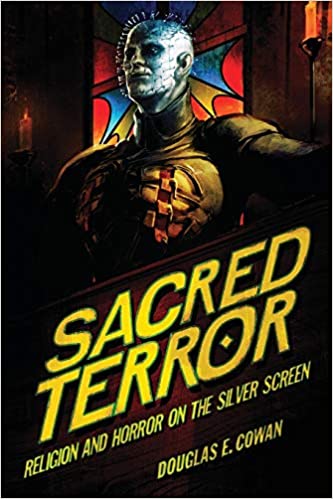
Sacred Terror: Religion and Horror on the Silver Screen – Douglas E. Cowan
A prominent attitude that I’ve encountered is that horror films and Christianity, or even religion generally, do not and should not go together. But what Cowan argues (and I agree) is that the horror genre actually actively engages many of the same kinds of questions and existential, spiritual dimensions of life that religion gets at, and is often poised as a direct response to religious ideas and ideals in significant ways. As such, viewing horror films with a religious eye can make for some fascinating, even encouraging conversation. What Cowan’s book provides is a sociological perspective and essentially a glossary of terms and concepts for articulating and exploring some of the ties between religion and horror, illustrated through a number of key examples and excerpts from a variety of films across the genre. In all honesty, the specific films that were chosen often struck me as somewhat arbitrary, serving to make a point rather than presenting a systematic exploration of a key subgenre or religious topic. But overall the argument and the ideas presented here are evocative, and invite application to a variety of other films. The book really makes the argument that evaluating religion in connection with popular culture forms is not as easy as it might seem at first glance, which is an enticing invitation for individuals to go in and do some of the engagement and thinking on their own.
November
- The Subversion of Christianity – Jacques Ellul
- Digital Creatives and the Rethinking of Religious Authority – Heidi A. Campbell
- The Adventures of Huckleberry Finn – Mark Twain
- Film Art: An Introduction – David Bordwell and Kristin Thompson
- Inventing Film Studies – Lee Grieveson
- Halo: Cryptum – Greg Bear
- Killer Cults: Stories of Charisma, Deceit, and Death – Stephen Singular
- The Making of Citizen Kane – Robert L. Carringer
- Make America Meme Again: The Rhetoric of the Alt-Right – Heather Suzanne Woods and Leslie A. Hahner
The Subversion of Christianity – Jacques Ellul
Between COVID, an election, and widespread conspiracies, 2020 was a rough year for churches and Christianity. With that in mind, reading Ellul’s critique of the ways that culture has influenced the church was incredibly convicting and helpful for thinking through our own contemporary moment and the impact that current events, ideologies, and trends have on how individuals belief in and practice their faith. Ellul’s thesis is simple but provocative: “Christianity” is not the religion that Christ himself enacted through his living example on earth, but has become distorted, subverted by human sin and the tendencies of people to be influenced by their surroundings. Cutting through this subversion is a tremendously difficult project, but one that is absolutely essential to the continuation of the Christian faith. Truthfully, there is so much in this book that I may end up doing a longer post about it at some point. But even aside from some of the specific historical arguments that Ellul traces and makes, his initial push for us to recognize the distinction between the Christian faith as modeled in Christ and the way that Christianity has become a political, ideological, and philosophical model seems a crucial lesson for many in America to reflect on in these troubled times. The implicit call to continually question whether our understanding of Christianity is supporting the work of the Kingdom of God or just the work of our ideal for the United States of America is perhaps more timely now than it ever has been before.
December
- The Girl with the Dragon Tattoo – Stieg Larsson
- The Girl Who Played with Fire – Stieg Larsson
- The Girl who Kicked the Hornet’s Nest – Stieg Larsson
- Sight, Sound, Motion – Herbert Zettl
- The Ethics of Authenticity – Charles Taylor
- God on the Big Screen: A History of Hollywood Prayer from the Silent Era to Today – Terry Lindvall
- Four Past Midnight – Stephen King
- Discipleship – Dietrich Bonhoeffer
- Child of God – Cormac McCarthy
- Educated – Tara Westover
- Stalling for Time: My Life as an FBI Hostage Negotiator – Gary Noesner
Four Past Midnight by Stephen King
It was tough to decide what book I wanted to highlight this month, because honestly there wasn’t a bad one in the batch. But in keeping with the observation above that “fun” seems to have been a major theme throughout these reviews, it felt appropriate to end the year with Stephen King. To be honest, I didn’t have high expectations coming into this specific collection of four short novels. I’d read the first of them, “The Langoliers,” a long time ago and wasn’t super impressed, but I’d been wanting to read a King book that I hadn’t read before, and this one seemed like it’d fit the bill. I didn’t end up loving “The Langoliers” necessarily any more, but the remainder of the stories in the book were absolutely top-notch classic King, specifically in the areas of characterization. “Secret Window, Secret Garden” was a prime mystery, employing very few of the character quirks and prose interstitials that King sometimes relies on a tad too much; “The Library Policeman” took a ridiculous idea and gave it some real fangs, along with a heavy dose of heart and love; and “The Sun Dog” took me by surprise with how viciously it drove towards an enticing, evocative ending. Though this book was released amongst an era of King’s work that was, to my assessments, often a bit overblown and lengthy, the stories here actually struck me as rather focused. At times the thrill of describing villainous, gory bits is as hectic as it is in other King works, but often the character studies are brutally honest and pinpoint just enough about the characters pasts and struggles to illustrate their inner conflicts without resorting to too much description. Add in that there were many moments of genuinely beautiful writing–especially in “Secret Window, Secret Garden,” which is a new favorite of mine–and this was a superb book to use to jump back into the varied worlds of King, and to end the year with.
 Zachary Sheldon