2021 was a busy year – between doctoral work and the birth of our first child in November, I’m honestly surprised that I was able to read as much as I did. Despite getting close in years past, this is the first year that I’ve actually made it to the threshold of having read two books a week throughout the year. Truthfully I’m not quite sure how that happened, I didn’t feel like I’d read more than some years and in fact didn’t realize that I was close to that amount until the beginning of December, but I’m glad I was able to read what I did, and realize now looking back that I made it through a lot of really fun, enjoyable books this year.
Next year is already looking like it’ll be a bit different. I’ve got a dissertation to finish, amongst other important projects to complete and deadlines to meet, and so it looks like I’ll have to be a bit more of a writer than I already am in 2022, and maybe a little less of a reader. I’m still looking forward to reading a lot and hoping to hit at least 52 books for the year, but we’ll see how the year shakes out.
In my usual fashion I’ve posted my monthly lists here and spotlighted one particular book from each month. Hopefully someone out there finds something interesting on here that they might be interested in reading for themselves!
January
- The Nazi and the Psychiatrist: Herman Göring, Dr. Douglas M. Kelly, and a Fatal Meeting of the Minds at the End of World War II – Jack El-Hai
- The Animation Studies Reader – Nichola Dobson
- The Elements of Style – William Strunk Jr.
- Digital Visual Effects in Cinema: The Seduction of Reality – Stephen Prince
- Waco: A Survivor’s Story – David Thibodeau
- Shoah: An Oral History of the Holocaust – Claude Lanzmann
- Auschwitz – Laurence Rees
- Leni Riefenstahl: The Fallen Film Goddess – Glenn B. Infield
- Passionate Views: Film, Cognition, and Emotion – Carl Plantinga
- The Scandal of the Evangelical Mind – Mark A. Noll
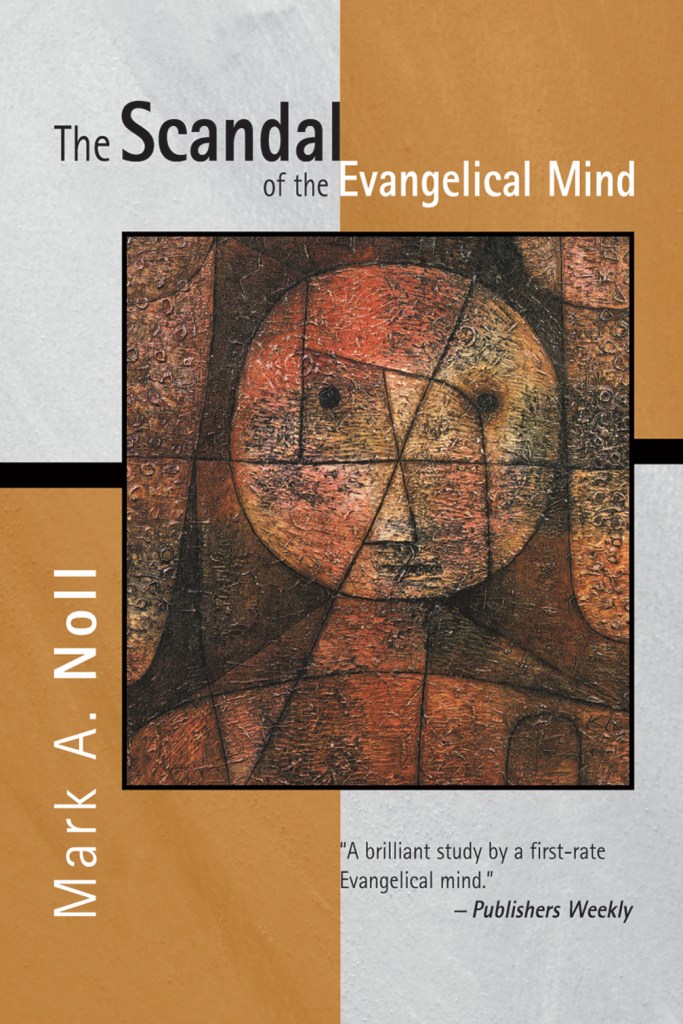
The Scandal of the Evangelical Mind – Mark A. Noll
This book is a bit older now, but feels continually timely to me as I survey the current landscape of church/culture relations in the U.S. Basically, Noll’s premise is that contemporary evangelicalism is a lot of things, and can do a lot of good, but often neglects the development and nourishment of the intellect out of a variety of misplaced or at least misunderstood cultural fears. Essentially, Noll argues, many conservative evangelicals have avoided formal higher education and rejected values like curiosity and a love for the ambiguity and eclecticism of the arts. But, he asserts, this does not need to be the case. Grounded belief and intellectual rigor are not nor should be mutually exclusive spheres in the subcultures of Christianity, but should reinforce and bolster one another’s goals in intellectually stimulating and rewarding ways. Many find Noll’s work to be a somewhat offensive attack on the state of the conservative American church; I found it to be an encouragement, a call to action for someone like me who is deeply committed to the missions of personal intellectual development and the expansion of Christian higher education. Noll isn’t intending to attack, despite the scandal of his title; he’s looking to reform, and personally I found his enthusiasm for this project and the depth of both his fears and his proposed solutions to be invigorating and challenging. Perhaps this is just because my background, training, and even current job predispose me to like the message of the book, but I think it’s more that Noll actually touches on something that I see a number of people in my life and from my past responding to. His words and argument maybe aren’t for everyone, but they certainly were for me this year and in this stage of my life.
February
- Rhetorics of Race and Religion on the Christian Right: Barack Obama and the War on Terror – Samuel P. Perry
- Dual Citizens: Politics and American Evangelicalism – Timothy Padgett
- The Real Scandal of the Evangelical Mind – Carl R. Trueman
- One Square Inch of Silence: One Man’s Quest to Preserve Quiet – Gordon Hempton
- Schindler’s Legacy: True Stories of the List Survivors – Elinor J. Brecher
- Who’s Afraid of Postmodernism?: Taking Derrida, Lyotard, and Foucault to Church – James K.A. Smith
- Jesus and John Wayne: How White Evangelicals Corrupted a Faith and Fractured a Nation – Kristin Kobes du Mez
- Anxious People – Frederik Backman
- Using Foucault’s Methods – Gavin Kendall
- Spectacular Digital Effects: CGI and Contemporary Cinema – Kristen Whissel
- A Jane Austen Education: How Six Novels Taught Me About Love, Friendship, and the Things That Really Matter – William Deresiewicz
- Anointed with Oil: How Christianity and Crude Made Modern America – Darren Dochuk
- Mine Eyes Have Seen the Glory: A Journey Into the Evangelical Subculture in America – Randall Balmer
- This Dangerous Book: How the Bible Has Shaped Our World and Why It Still Matters Today – Steve Green
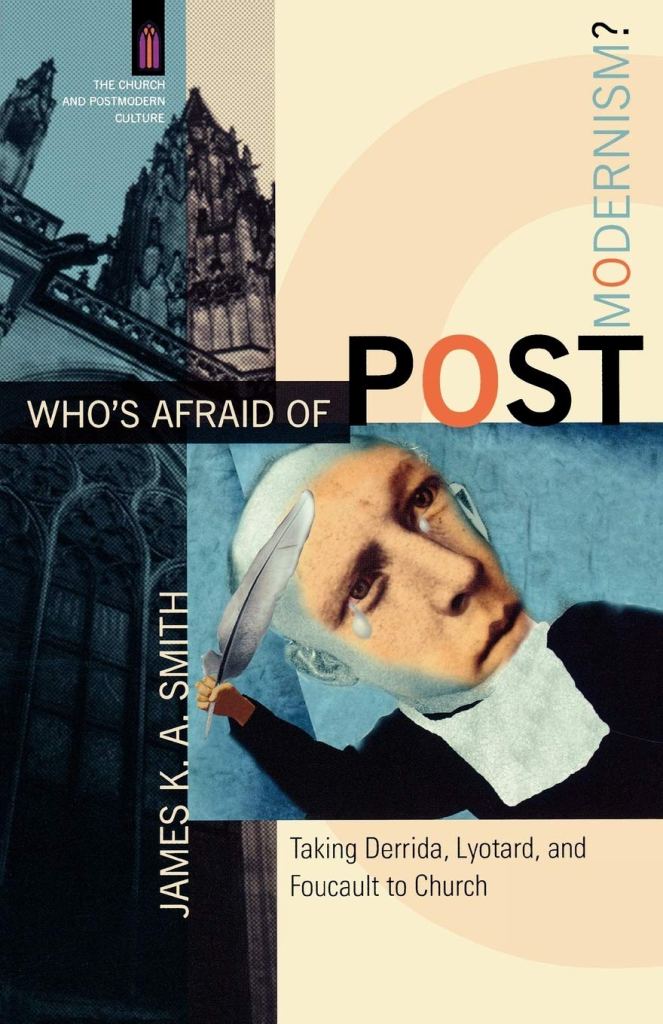
Who’s Afraid of Postmodernism?: Taking Derrida, Lyotard, and Foucault to Church – James K.A. Smith
I’ve long loved Smith’s work on cultural liturgies and the role of culture and the arts in contemporary Christian practice, and this volume does not disappoint as a thorough but relatively accessible introduction to thinking through how “postmodern” scholarship can add depth and significance to one’s worship. Not unlike Noll, Smith argues that churches and Christians have segmented their worship and their efforts in certain ways that at times seem to cede power to contemporary cultural forces rather than aligning with historic Christian practice and belief. At the same time, the rise of confusing or intimidating cultural elements has muddied the waters and confused some Christians about the aims or beliefs of the society around them. Smith’s work acts as a roadmap to detail why some of these figures and theories really aren’t as scary as some might make them seem, and in fact argues that they can help provide access to a deeper understanding of historic Christian belief that can have significant benefits for the contemporary worshipper. The philosophers Smith engages with are known for being difficult, but he does an incredible job of making their work comprehensible and directly applicable, which is no small feat. My one small critique is that the book is relatively accessible, but is certainly not quite as easygoing or as easily engaged as maybe its own copy tries to make it–there’s still a decent amount of jargon and philosophizing that happens in these pages and can make some of its chapters a bit tricky to navigate. Still, the book is an incredible resource and a convicting challenge to engage the full depth of God’s gifts in worship, the church, and culture, and stands apart as a strong statement on the Christian’s responsibility to do just that.
March
- Red Rising – Pierce Brown
- Voices from Chernobyl – Alexievich Svetlana
- The Rape of Nanking – Iris Chang
- Murder on the Orient Express – Agatha Christie
- How to Do Nothing: Resisting the Attention Economy – Jenny Odell
- Forrest Gump – Winston Groom
- Evangelicals: Who They Have Been, Are Now, and Could Be – David W. Bebbington
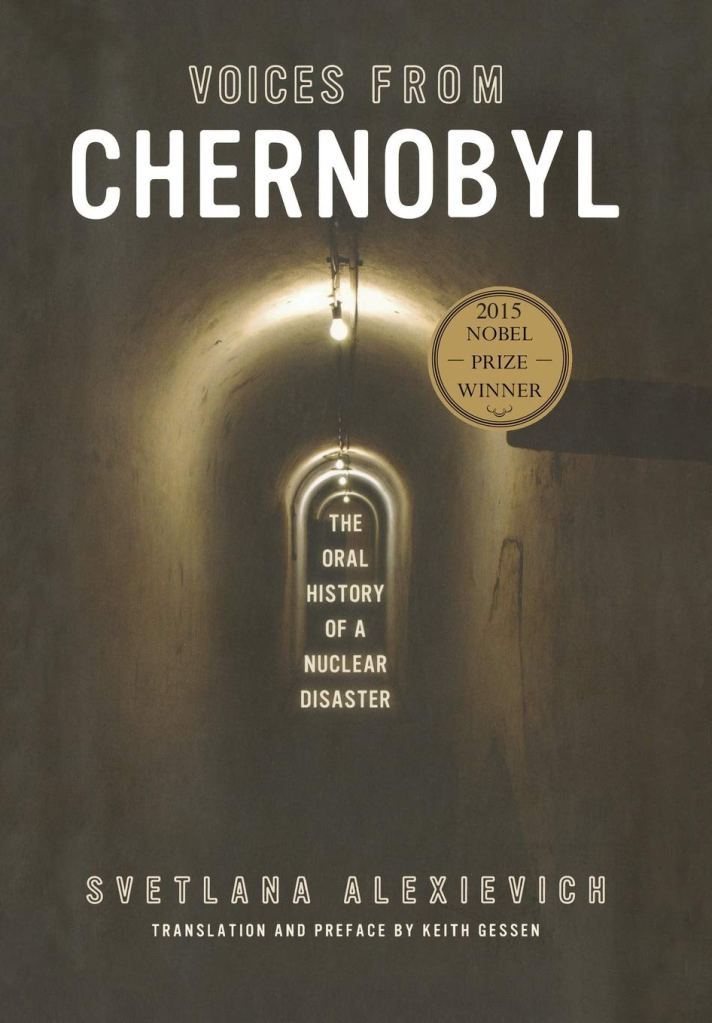
Voices from Chernobyl – Alexievich Svetlana
Like many, I’ve long been fascinated with the Chernobyl disaster and its lingering effects, as well as its impact and importance in popular culture. This loose memoir is an incredible narrative work, bringing together a chorus of voices to narrate the events of the disaster and more specifically the impacts and legacy of the disaster on real persons who live real lives. It’s easy to focus on the main players in the power plant or in the Kremlin at the time, and that makes for a compelling narrative (as HBO’s phenomenal miniseries showed); but concentrating at the high-level story negates the hundreds of thousands of individuals who suffered from the fallout of those events or were mobilized to halt the impending disaster and its aftereffects. This testimony gives life to those stories, the stories that really give you an understanding of what really happened and what it seems to mean for the world beyond the details of who said what and did what to cause the reactor to explode; it’s in the everyday details of evacuations and leaving family homes and heirlooms or being unable to escape the effects of radiation that the Chernobyl disaster’s true significance is revealed, and this artfully composed volume gives unprecedented and remarkable haunting access to those stories. This isn’t necessarily a fun read, but it’s an important one.
April
- Cloud Atlas – David Mitchell
- Custer Died For Your Sins – Vine Deloria Jr.
- Cujo – Stephen King
- The Gunslinger – Stephen King
- The Drawing of the Three – Stephen King
- The Waste Lands – Stephen King
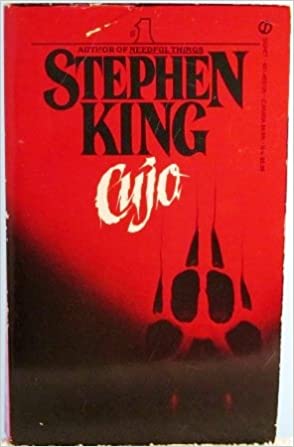
Cujo – Stephen King
I avoided this King novel for a long time, both out of my own love for dogs and my understanding that most of the time when King writes a book focused on one big villainous creature/creation it ends up being a tiny bit disappointing. But I was shocked to find how incredible Cujo was, how absolutely relatable and deviously normal the story was, which only underscores how awful its terror and horror really is. (Honestly, I should know better by now, it’s often the King books that I’ve avoided for a while that end up being the most incredible.) This is a prime example of how King moves beyond his horror reputation into the realm of straight character fiction: the dog, Cujo, gets top billing here as the lurking terror that threatens and frightens, but the real horror at work here is in the problems and abuses in adult relationships and the way that children are caught up in the habits and sins of their parents. The real monsters are normal people living in ways that are sadly normal, with foibles and problems that we can all understand at one level or another; the real monsters are people that remind us of people we already know, or even of ourselves. Cujo himself is actually a victim of these patterns and behaviors, made menacing only as a side effect of one bad actor’s terrible behavior and decisions. And King writes all of this so plainly but artfully, causing us a great deal of conflict in the way that he forces us to sympathize and fear certain characters at the same time, all in a narrative that absolutely flies in part through the specifics of the lives at stake in the final conflict. Cujo seized on my emotions and was riveting from the very start–and you really can’t ask for much more from a work of fiction.
May
- Wizard and Glass – Stephen King
- Not a Fan: Becoming a Completely Committed Follower of Jesus – Kyle Idleman
- Screen Adaptation: Impure Cinema – Deborah Cartmell
- Wolves of the Calla – Stephen King
- The Jargon of Authenticity – Theodor W. Adorno
- Song of Susannah – Stephen King
- The Dark Tower – Stephen King
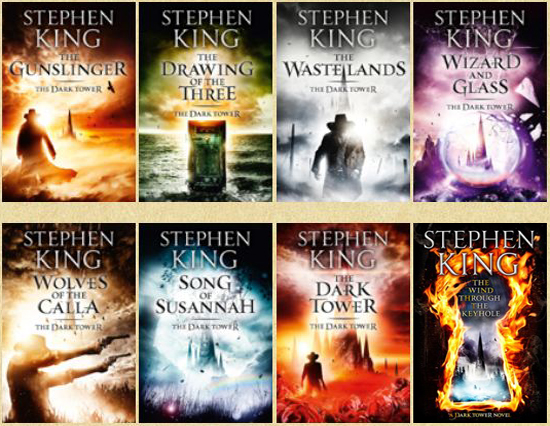
All of The Dark Tower books – Stephen King
It may be lazy, but I couldn’t decide between Wizard and Glass or The Dark Tower as the best one to highlight for this month, so I figured I’d just link to my two longer reviews of the first four volumes in the series and the last four volumes.
June
- The Wind Through the Keyhole – Stephen King
- Memo for a Movie: A Short Life of Dietrich Bonhoeffer – Theodore A. Gill
- Film in Australia: An Introduction – Albert Moran
- Authentic Fakes: Religion and American Popular Culture – David Chidester
- Holes – Louis Sachar
- Hatchet – Gary Paulsen
- Reinventing Cinema: Movies in the Age of Media Convergence – Chuck Tryon
- Brian’s Hunt – Gary Paulsen
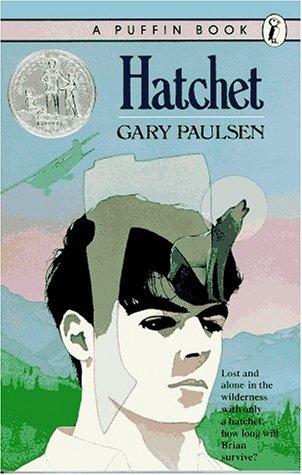
Hatchet – Gary Paulsen
I’m not sure why this month included a nostalgia-laden trip back to elementary and middle school with several young adult novels, but I’m glad it did. Between the two volumes of Paulsen’s Hatchet cycle and Louis Sachar’s Holes I just had a ton of fun this month reading fun, smart narratives with no pretensions or fluff. But I wanted to single out Hatchet both because of Paulsen’s recent passing and because of the outsized influence it had on me as a kid. Reading Hatchet for the first time in second or third grade, I was absolutely seized by the idea of surviving in the wilderness and adventuring out on my own; I never did that, and really wasn’t much of a woodsy kid by any means, but the power of the story stuck with me across the years. Re-reading the book this year, though, I was struck more by the story’s introversion and its attention to the psychology of dealing with and overcoming grief and sadness. Though written for and from the perspective of a teenager, there was a depth and beauty to the way Paulsen worked through the urge to survive not just the forces of the wild but the forces of modernity, culture, and family that was absolutely astounding. The book is absolutely a young adult novel; but it’s also a powerful character study that I think has more maturity than its typical labeling gives it credit for. I felt like I learned a lot of new and important things from reading the book again at nearly 30, and would highly recommend that experience to anyone.
July
- The Believer: Alien Encounters, Hard Science, and the Passion of John Mack – Ralph Blumenthal
- The Making of Biblical Womanhood: How the Subjugation of Women Became Gospel Truth – Beth Allison Barr
- How to Read the Bible for All Its Worth – Gordon D. Fee
- He Speaks Our Language: The Story of an Irish Missionary in the Australian Outback – Rob Douglas
- On the Incarnation – St. Athanasius
- Power – Michel Foucault
- Take Heart: Christian Courage in the Age of Unbelief – Matt Chandler
- A Rhetoric of Irony – Wayne C. Booth
- Skeleton Crew – Stephen King
- Things My Son Needs to Know About the World – Frederik Backman
- Area 51: An Uncensored History of America’s Top Secret Military Base – Annie Jacobsen
- Playing Indian – Philip J. Deloria
- All the President’s Men – Carl Bernstein and Bob Woodward
- The Secret History of Wonder Woman – Jill Lepore
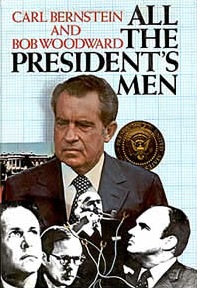
All the President’s Men – Carl Bernstein and Bob Woodward
So I’ll be honest here – part of my enjoyment of this book was actually due to some ignorance at its actual narrative, which ended up surprising me in some pretty key ways (that I guess I’m going to spoil here now). I had always thought that this was a belated memoir of how reporters helped uncover the Watergate scandal and roust Nixon from power; what I didn’t know was that the book was published well before Nixon resigned, and that it was essentially the case for why Nixon ought to be impeached and was unfit for the presidency. Throughout the book I was somewhat surprised by the efficient course of its narrative, the sheer amount of details included about every encounter and every step of the reporting process, and often by the lack of retrospection in some areas where I might have expected it. But as I reached the end of the book where Bernstein and Woodward really make their case against Nixon it all made sense – this wasn’t a memoir, it was a clinic in forensic reporting, investigation, and argumentation on a grand scale, demonstrating not only how reporters work and how the work of reporters functions in politics, but documenting step-by-step the way that Nixon’s wrongdoing and lies were uncovered. To me, this flipped my expectations for the book on their head just in those closing pages, and gave me a deeper appreciation for the work of reporters both then and now, as well as for the incredible legwork done by these specific reporters in this specific case. The dedication to democracy and the belief in truth and justice shone through the story from start to finish, and was humbling and impressive to read about in our own era.
August
- A Rumor of War – Philip Caputo
- Guns, Germs and Steel: The Fates of Human Societies – Jared Diamond
- When Art Disrupts Religion: Aesthetic Experience and the Evangelical Mind – Philip S. Francis
- The Library at Mount Char – Scott Hawkins
- The Bloomsbury Companion to Religion and Film – William L. Blizek
- The Battle for Bonhoeffer – Stephen R. Haynes
- Religion and Popular Culture: A Hyper-real Testament – Adam Possamai
- The Turn of the Screw – Henry James
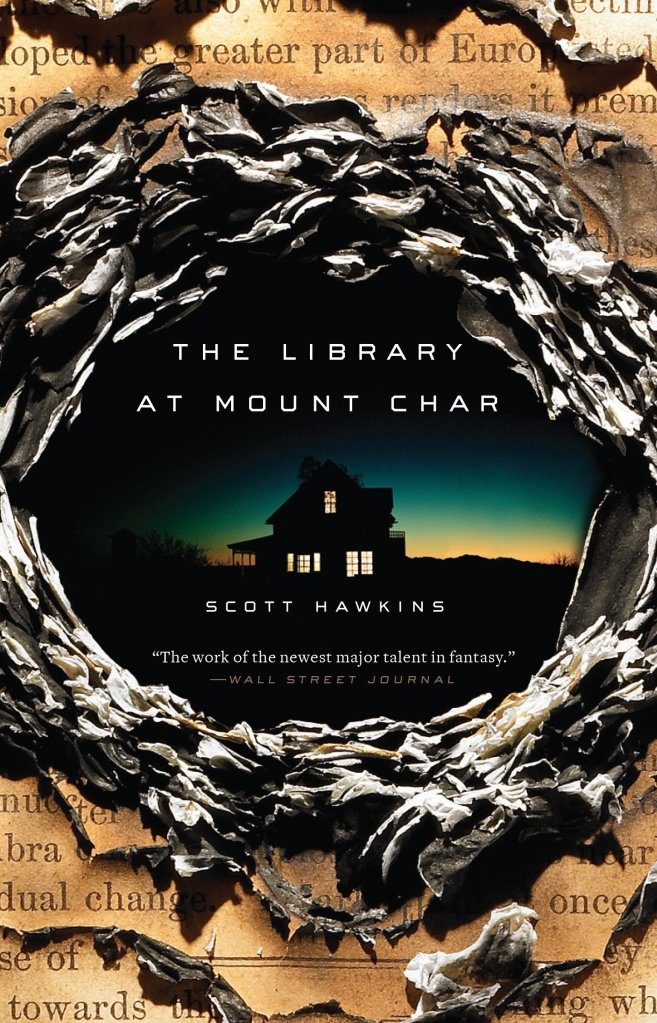
The Library at Mount Char – Scott Hawkins
With a few exceptions, I’ve learned that I’m not one for fantasy as much as I might have expected to be. But I’ve also learned that stories about old gods and myths interacting with the contemporary world scratches a peculiar itch for me in a way that I really enjoy – provided the narrative and characters are good. Hawkins’s book scratches that itch and checks all those boxes in a big way. It seems to me that in a lot of speculative and fantasy fiction, the authors feel the need to explain their world and its systems in an amount of detail that makes you wonder if they themselves were only just figuring those things out as they wrote the book; Hawkins instead writes in a self-assured way that forces the reader to figure out the details as they go, and to actually exercise some intellect in piecing together how magic and other elements of the plot work. Essentially, he treats his readers like adults and expects them to want to work to understand the plot and its characters. At the same time, he treats his characters like real people, and that’s what I found most impressive here: the world-building and magic-making are all incredibly well-done, but all of this only works because it’s used in the service of a story that is entirely concerned with its characters lives, desires, and needs. The core of the book is emotional and fragile, and though everything around it is blustery and at times incredibly violent, the story never loses its focus and really brings the reader along through to a vividly felt conclusion. This is a bizarre story that takes some time to get into and some work to understand, but taking the time and doing the work is intensely rewarding.
September
- Fritz Lang – Robert A. Armour
- Prayer in the Night: For Those Who Work or Watch or Weep – Tish Harrison Warren
- Golden Son – Pierce Brown
- Foundations of the Christian Faith – James Montgomery Boice
- Insomnia – Stephen King
- You Are What You Love: The Spiritual Power of Habit – James K.A. Smith
- Bag of Bones – Stephen King
- Called to Teach – Christopher J. Richmann
- Stardom and Celebrity: A Reader – Sean Redmond
- Blaze – Stephen King
- Mere Christianity – C.S. Lewis
- Legitimation Crisis – Jurgen Habermas
- Dreaming Dreams for Christian Higher Education – David Guthrie
- On Violence – Hannah Arendt
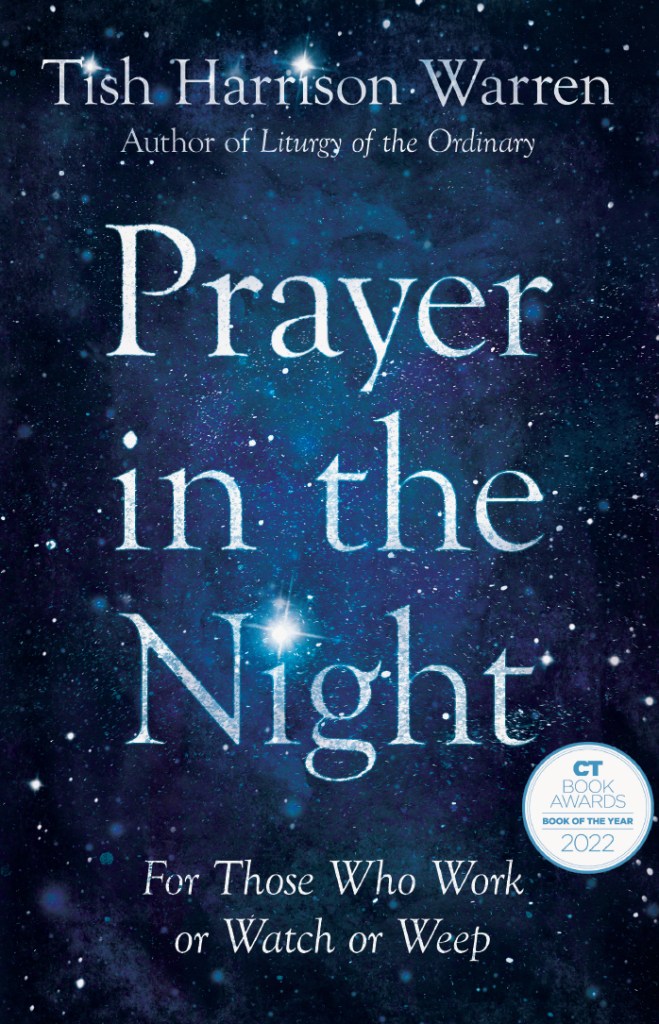
Prayer in the Night: For Those Who Work or Watch or Weep – Tish Harrison Warren
I was not raised in a Christian tradition that privileged traditional displays of liturgy or acknowledged many of the major contributions to theology and practice that emerged from the historic church. As I’ve grown older, though, I’ve found the prayers, practices, and signs of Christian history to be incredibly valuable to my own faith practice and the deepening of my discipleship. Tish Warren’s writing has been an incredible aide in that journey, first in Liturgy of the Ordinary and now in this book. Prayer in the Night specifically explores the prayer of Compline, breaking it down phrase by phrase to explore the comfort that God provides to those who are forgotten, those who are in sorrow, and even those who are in seasons of joy. Warren’s writing is beautiful, and she always finds incredible, thought-provoking, and often hilarious ways to illustrate the ways that Compline evokes truths about God to guide us in praying not just for our sake or benefit but for God’s as well. Honestly it’s hard to review a book like this because its prose is such an important part of the experience of its message that even describing its aims or content feels like I’m doing a disservice to its author. Suffice it to say that few books on prayer or even discipleship have been as beautiful and useful for me. Even for those whose traditions or understandings of faith typically don’t engage with historic liturgy, I’d recommend this book because it doesn’t just focus on the prayer of Compline but deeply explores the theological truths behind the words and teaches great truths about God and Scripture itself, too.
October
- The Bible in American Life – Philip Goff
- Prime Time and Misdemeanors: Investigating the 1950s TV Scandal, A D.A.’s Account – Joseph Stone
- Moby Dick – Herman Melville
- Rapture Culture: Left Behind in Evangelical America – Amy Johnson Frykholm
- The Politics of Evangelical Identity: Local Churches and Partisan Divides in the United States and Canada – Lydia Bean
- Under the Banner of Heaven: A Story of Violent Faith – Jon Krakauer
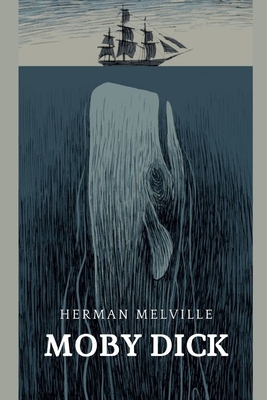
Moby Dick – Herman Melville
Ok so I bought a copy of Moby Dick because I thought it would be fun for Kathleen and I to read it in order to then watch a movie adaptation in order to then read the book In the Heart of the Sea (which is about the true story behind Moby Dick) and then watch the movie adaptation of that book. It’s complicated, I know. But I love reading books and seeing how they’re translated to the screen, and I was interested in the adaptation of In the Heart of the Sea because it was directed by Ron Howard and I’ve got a strange soft spot for his work, even when it’s mediocre. Kathleen and I never got around to reading Moby Dick together – she read it, didn’t like it, and we’ve still not watched an adaptation of it or gone further down the chain of where the novel was supposed to lead us. Even so, I felt obligated to try and at least read the book, if only to say I had and to get rid of our copy to clear up room on the shelf. I was surprised, though, to find that I absolutely loved my time with the novel. Strangely, the plot barely mattered to me and I was pleasantly surprised to find that Ahab was a much smaller part of the story than I’d always been lead to believe. But I absolutely loved the detailed descriptions of whaling practices and histories, the more meticulous the chapter the better. There was some strange energy to Melville’s writing in these moments, to the point where I really felt like I could practically see the things he was describing and understood their intricacies, even as I’m incredibly confident that what I saw in my head and imagination is incredibly far off from what he was saying or what the reality really was. Still, I couldn’t put the book down in those sections, but also always felt like those chapters were moving forward a larger narrative that for me was less centered on the inevitable collision with the titular whale and focused more on the role that whales and whaling have played in history. Obviously this wasn’t the intended message of the book for Melville or many generations of readers, but it still felt to me like an incredible archive, a testament to a bygone era of extremes in industry and industriousness, and the force of Melville’s writing and keen eye was impossible for me to ignore. I’m sure that most of the book’s symbolism and literary significance went right over my head in this initial reading of the book, but it made a lasting impression nonetheless, and is a book that I’m hoping to revisit in the future with, perhaps, a better annotated copy.
November
- The Book of General Ignorance – John Lloyd
- Educating for Shalom: Essays on Christian Higher Education – Nicholas Wolterstorff
- High on God: How Megachurches Won the Heart of America – James Wellman
- Thieves in the Temple: The Christian Church and the Selling of the American Soul – Jeffrey G. MacDonald
- Religion & Popular Culture: A Cultural Studies Approach – Chris Klassen
- Reading Evangelicals: How Christian Fiction Shaped a Culture and a Faith – Daniel Silliman
- Life’s Too Short to Pretend You’re Not Religious – David Dark
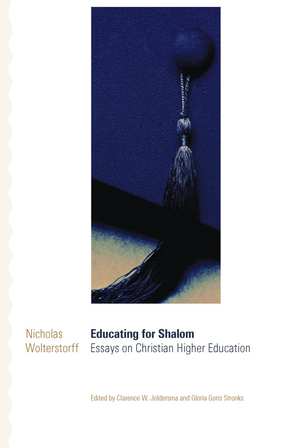
Life’s Too Short to Pretend You’re Not Religious – David Dark and Educating for Shalom: Essays on Christian Higher Education – Nicholas Wolterstorff
I’ve been fortunate to have spent most of my life around smart, talented, and capable individuals who are continually trying to understand and work out their faith and what it means to live that faith in the real world. This was true of my family growing up and many in the church we attended, but was really driven home to me by the friends I made and faculty I learned under at Geneva College. There especially it was impressed upon me that true religion and true Christianity isn’t dualistic but comprehensive and inclusive of all aspects of our lives, work, and education. Our habits, interests, hobbies and more are all a part of who we are not just as people but as religious people–there is no sphere or part of our lives left untouched by our religious commitments, ethics, or drives. Acknowledging this and really owning up to it ought to shape the way we then engage with things like our hobbies or our relationships, causing us to consider and engage them through an ultimately cosmic lens. In college especially, being around people who believed this way and then acted upon it left a great impression, one that I’ve carried with me and tried to emulate ever since. And it’s that kind of commitment and passion for living out one’s faith that I find in the two books that I’m highlighting for this month. David Dark’s book is a deliberate and attentive argument for why things like popular culture matter as formative objects for religious faith, teaching us things and ultimately pointing us back to the divine whether we like it or not. Sharing parts of his “attention collection” with the reader, Dark shows that we’re kidding ourselves if we don’t acknowledge that so much of what we do and think on a daily basis qualifies as religious activity and so is religious activity whether we like it or not. We are religious creatures always seeking after meaning, and this is a great thing with important and rich implications for our lives and especially our relationships with others. Religion implies relationship which also implies ethics, imbuing each of us with a responsibility to our fellow man that ought to suffuse every aspect of our lives. And though Dark’s is a relatively recent book, its message is, well, classic, as evidenced by how its basic building blocks are eminently present in a variety of other works, including Education for Shalom, which is a collection of essays–many of which date back to the 1980s–on the philosophy of Christian higher education. Wolterstorff’s project is to speculate on what a Christian college or university looks like, and what it means for faculty and staff to engage practices that uniquely shape and form settings of Christian higher education. The conclusion that he comes to is that Christian higher education ought to be informed primarily by shalom, a peace-seeking that encompasses all aspects of our selves and our lives, that integrates our faith into everything we do and that seeks to harmonize that faith with the realities of the world. Essentially, Wolterstorff argues, there is no getting away from the fact that everything we do is tinged with religious meaning, and we ought to try and act on those religious meanings in productive directions for the witness of Christians and the Christian faith. This means that we ought to do justice and teach justice and practice justice in our immediate contexts and across the globe, in the activities of everyday life and in grand gestures of education and service. What Wolterstorff and Dark argue for in both of their books is the same kid of faith encompassed in many of the other books that I’ve highlighted in this year-in-review: an active faith informed by the history of the church and fitted to the challenges and constraints of the present moment. This month I loved reading these books in close proximity to one another because it showed that the aim of committed Christian action remains the same, and it was encouraging to see the consistency in messaging and belief as a testament to the way that so many are working and writing to keep the church and individual Christian’s accountable and in line with the aims of Scripture.
December
- Household Horror: Cinematic Fear and the Secret Life of Everyday Objects – Marc Olivier
- The Things They Cannot Say: Stories Soldiers Won’t Tell You About What They’ve Seen, Done or Failed to Do in War – Kevin Sites
- Horror Framing and the General Election: Ghosts and Ghouls in Twenty-First-Century Presidential Campaign Advertisements – Fielding Montgomery
- Internet Celebrity: Understanding Fame Online – Crystal Abidin
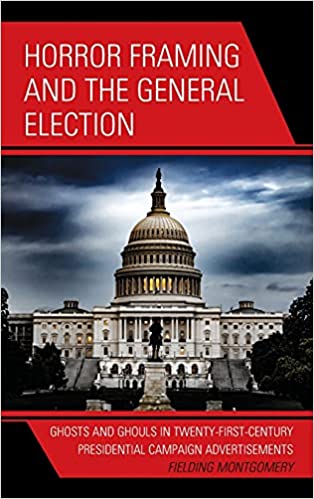
Horror Framing and the General Election: Ghosts and Ghouls in Twenty-First-Century Presidential Campaign Advertisements – Fielding Montgomery
This one is an especially fun one to highlight, because this book was written by a friend and I happened to be around (though definitely not involved) for its creation. Fielding was a student at Baylor at the same time I was, and the genesis for this book project came from a paper he wrote for a class we took with several other graduate students on the history and significance of horror films. From this grew an impressively comprehensive and insightful book on the way that contemporary presidential campaign advertisements borrow fears and framing devices from horror films to construct monsters out of political opponents and paint certain parties and people in conflicted, horrific lights. Using archived television commercials, Fielding analyzes all of the presidential elections from 2000 through 2020 to show how various candidates have used horror framing to present their opponents and potentially frighten citizens by creating certain images of how America is, has been, and could be. Though not all campaigns are entirely horrific or monstrous and no two elections are horrific in the same way, contemporary electoral politics has a surprising amount in common with horror films and horror framing, with direct and often drastic impacts on the way that individuals and groups see political candidates and react to political messaging. All of this is examined in this book in a thorough and interesting fashion, with an eye towards the practical application of rhetorical theories not only to the television commercials that are analyzed but to the reader’s understanding of political advertisements. One comes away from this book armed with the tools to recognize horror framing in television spots and to judge that framing from an ethical perspective. It’s honestly an impressive feat for a first book, and is all packaged in an interesting, easy-to-read manner that I thoroughly enjoyed exploring. There’s a chance that I may be a little biased here, sure, but I do genuinely think this is a great, useful book.
So, that was 2021 in books for me. As I mentioned above, I think 2022 is going to be quite different–I’m still looking forward to reading a lot, but I’m setting my sights a little bit lower in order to make sure I’ve got my work and other priorities straight. I’ll still shoot for at least 52 books on the year, but probably won’t push myself to do much more except as dissertation and other writing requires. And I’m sure that once I get into it and have deadlines and obligations I may feel differently, but at least right now I’m quite looking forward to the different rhythms and labor that will come with necessarily having to be more of a writer than a reader. It’ll make for a fun change of pace and a different kind of personal challenge.
 Zachary Sheldon